On March 22, 1996, the first *Resident Evil* was released. Players explored a Western-style mansion captured through fixed camera angles, facing off against monsters while carefully managing limited ammunition and healing items—a style that had a major influence on subsequent survival horror games.
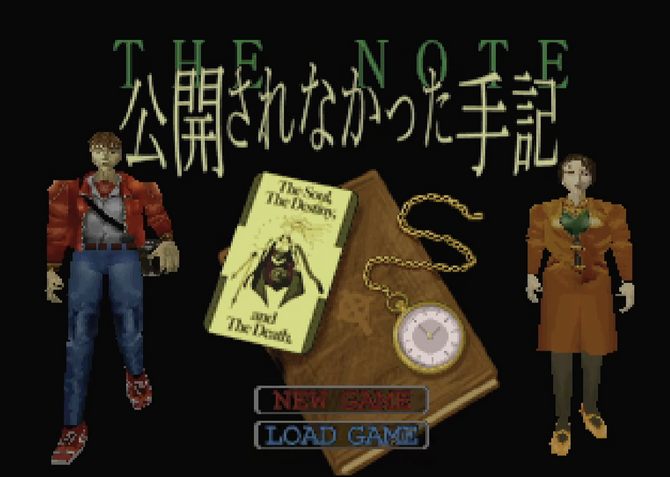
Then, on January 17, 1997, Sunsoft released the horror adventure game *The Unpublished Diary* for the PlayStation 1.
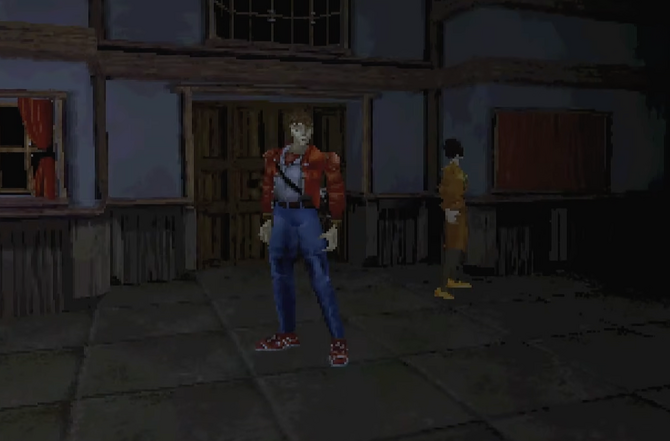
This game is a classic 3D adventure in which freelance occult reporter Kazuya Shindo, accompanied by his partner Chisato Kamiya, visits a dilapidated European mansion. As they progress, they collect hidden “diaries” and items while solving various puzzles and overcoming traps.
Looking solely at the basic framework—exploring a mansion, fighting monsters, and solving puzzles—it’s hard not to compare it to *Resident Evil*, which was released around the same time.

However, when you actually play it, the feel and direction are quite different. Unlike *Resident Evil*, which uses a fixed camera, this game adopts a first-person perspective; furthermore, rather than treating “it’s too dark to see” as mere atmosphere, it integrates lighting and visibility itself into the game system.
In this article, we’ll look back on the unique charm of *The Unpublished Diary*—including its rough edges—a game that, while part of the same “Western-style mansion horror” lineage as *Resident Evil*, sought to create fear in a different way.
◆ The Immersive First-Person Perspective, Not a Fixed Camera
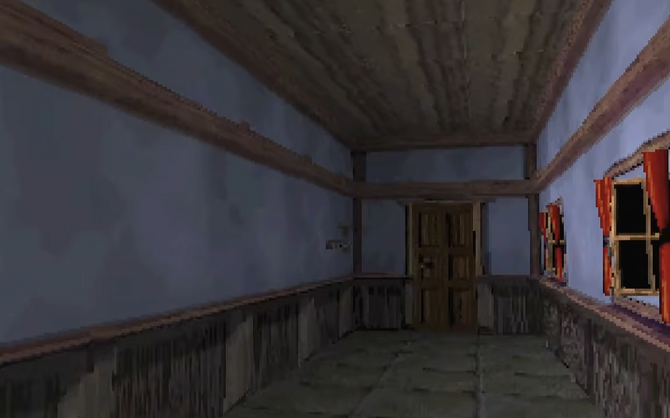
What first leaves a lasting impression in *The Unpublished Diary* is the exploration as you navigate a Western-style mansion built with 3D polygons from a first-person perspective.
Using basic controls—up and down to move forward and backward, left and right to move sideways—you explore rooms and hallways while shifting your viewpoint. While third-person perspectives are occasionally interspersed during events, during normal exploration, the player essentially takes on the protagonist’s field of view.
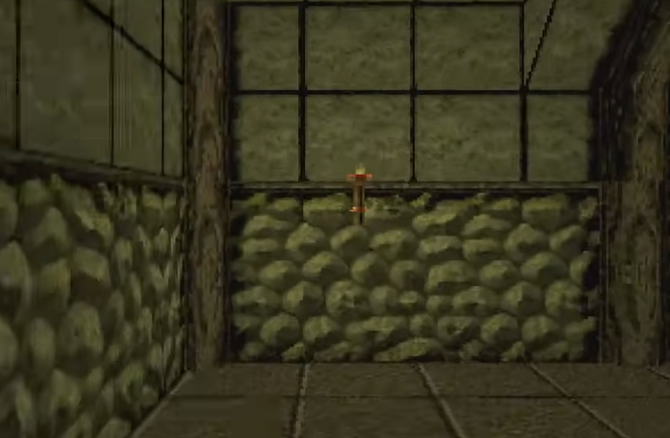
For a survival horror game released in 1997, this was a rather unconventional choice.
While *Resident Evil* uses fixed cameras to give you a general sense of a room’s layout, in this game, you can only see what you’re facing. You won’t know what’s behind you or around the next corner until you actually turn your gaze that way.
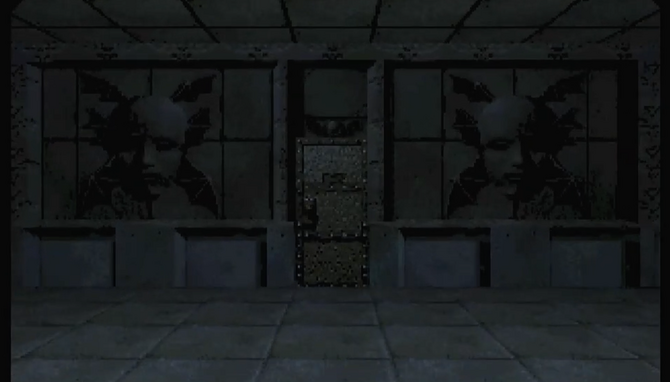
Furthermore, combined with the rough polygons and low-resolution graphics typical of the PS1, distant objects have blurred outlines. Is there something at the end of the hallway, or is it just a prop? This “blurriness,” which makes it impossible to tell right away, ultimately contributes to the sense of unease as you walk through the mansion.
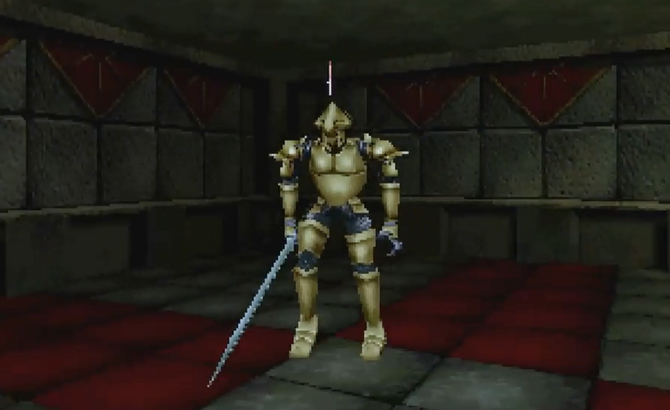
On the other hand, the controls are generally poor. This is particularly noticeable during combat: although you use a hunting rifle found in the mansion to fend off rats and bats, it’s difficult to aim at small enemies, and there are times when you can’t attack as intended. If you’re expecting the smooth controls of modern first-person shooters, you’ll likely be quite taken aback.
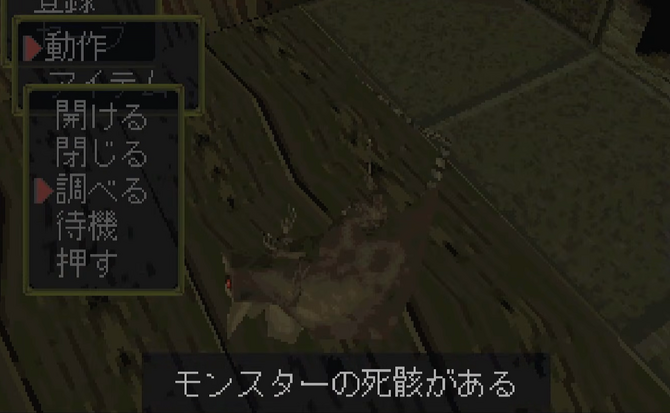
However, since you can’t turn around quickly, a window of vulnerability opens up between sensing danger and responding to it. This weakness in the unpolished first-person perspective actually served to instill a sense of urgency and anxiety in the player.
◆Exploring the Mansion with Unique Control Commands
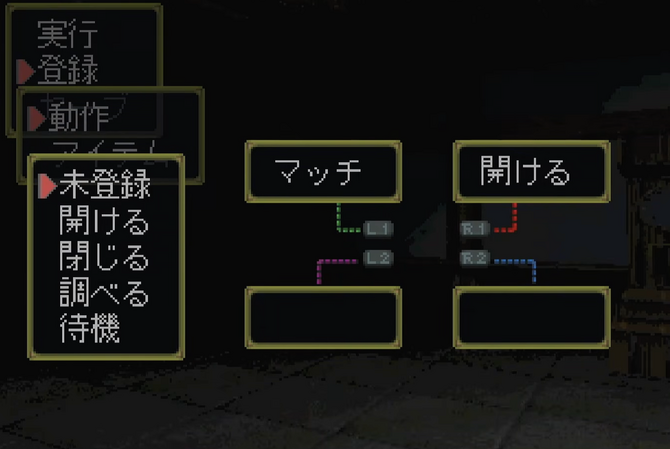
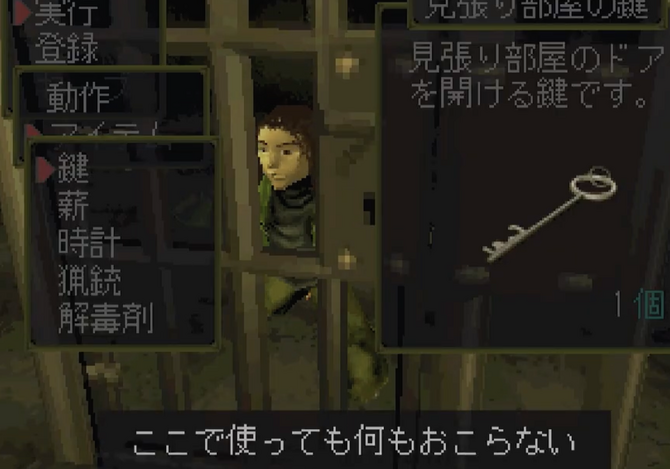
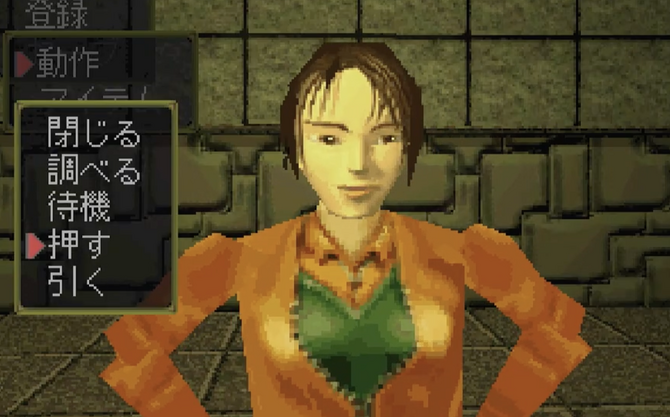
A distinctive feature of this game is the shortcut system that allows you to assign actions like “Open” and “Examine,” as well as shotguns and carried items, to the L1, L2, R1, and R2 buttons.
For example, doors won’t open simply by approaching them; you must execute the “Open” command, which, as confirmed in the strategy guide, is assigned to R1 by default. Frequently used items, such as your shotgun, can also be assigned to the shoulder buttons, allowing you to customize your controls as you progress.
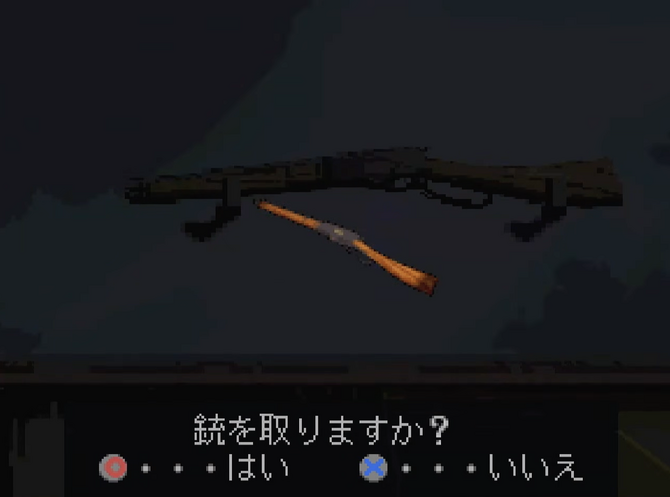
Furthermore, players must choose their actions based on the situation—such as “examining” suspicious furniture or items on the ground, or using the appropriate key in front of a locked door. In dark areas, you may not be able to examine an object thoroughly even if it’s visible on screen, so you’ll need to open curtains or light a lantern to ensure adequate illumination.
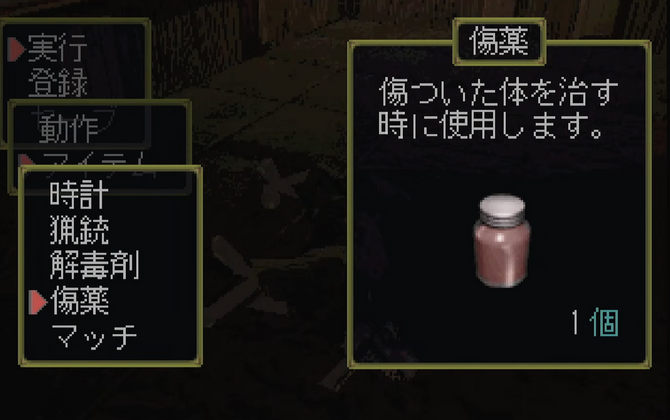
Rather than simply hovering the cursor and pressing a button, you must perform a series of actions yourself: “look,” “approach,” “brighten the area,” and “use the appropriate command.” It is precisely this slightly tedious process that creates the game’s unique sense of exploration, making it feel as though you’re actually investigating the mansion.
◆ “Light and Darkness” Determine Game Progress
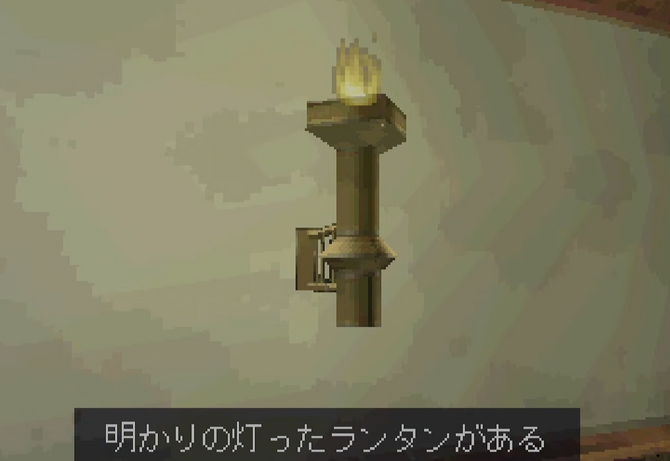
One of the game’s major features is “brightness” within the exploration areas.
There are many dark areas inside the mansion, and without sufficient light, you cannot even examine objects right in front of you. You’ll need to adjust windows and curtains to let in natural light, light a lantern, or use the fireplace. Only by brightening your surroundings in this way can you finally pick up items or investigate mechanisms.
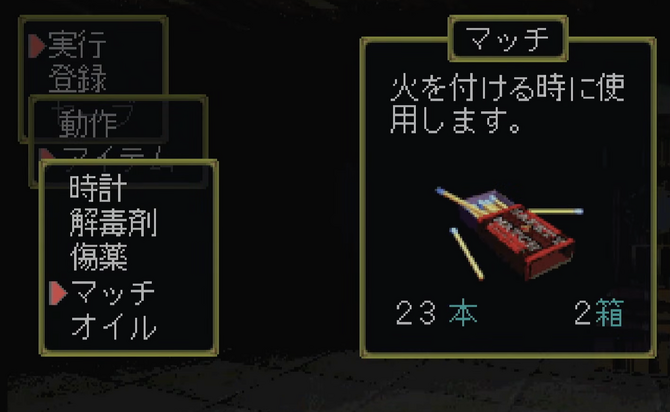
In other words, lighting in this game isn’t just a stylistic element to set the mood—it’s a full-fledged part of the game system that determines “what you can see.”
However, simply lighting everything up doesn’t solve everything. In the early stages of the mansion, there are scenes where hints appear in paintings only after you close the curtains and turn off the lamps to darken the room. While light aids exploration, the tricky part is that darkness itself can sometimes be a prerequisite for solving puzzles.
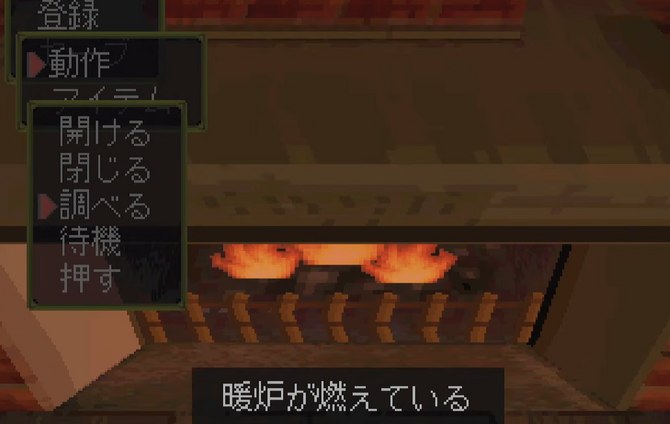
This is where the essence of *The Unpublished Diary* lies. If exploring Western-style mansions in the *Biohazard* series involves “unlocking” sealed-off areas by solving puzzles involving keys, crests, and various mechanisms, this game incorporates environmental manipulation—specifically, “brightening” or “darkening” rooms—into the exploration itself.
Since the game feels like this from start to finish, the pacing is truly poor. You have to purchase supplies like lanterns, matches, and oil, and in dark areas, you must first secure a light source—which can feel quite tedious.
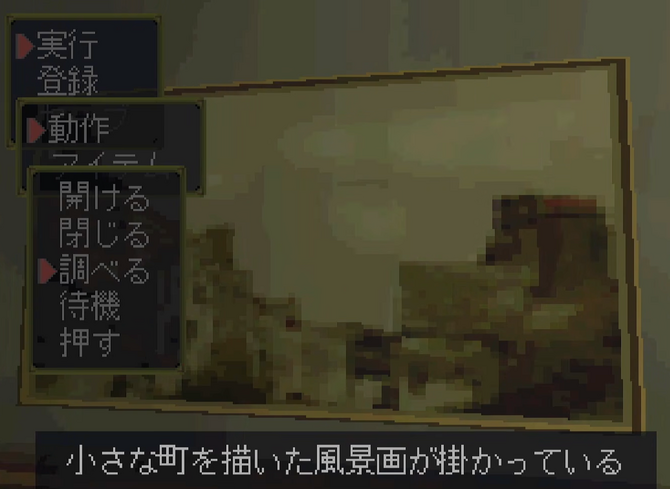
Nevertheless, what makes this game intriguing is that “light and darkness” themselves dictate the game’s progression, leading to a uniqueness that can’t be experienced in *Bio*.
◆ The Unique “Eyelid System”: The More You Take Damage, the Less You Can See
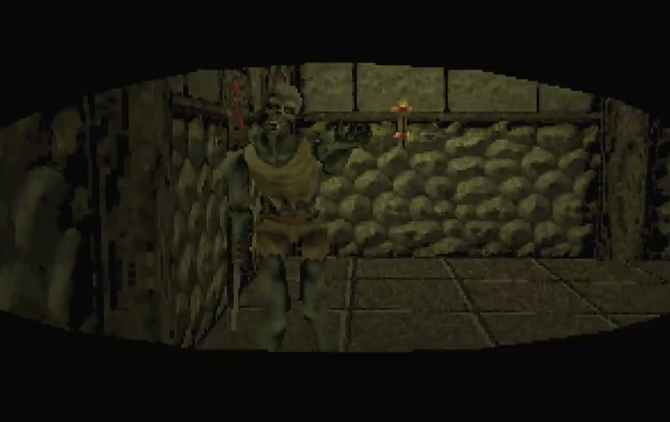
Another feature that makes this game unforgettable is the so-called “eyelid system,” which links health to your field of vision.
Unlike most games, this title doesn’t display a health bar on the screen. Instead, “eyelids” (representing your field of vision) appear at the top and bottom of the screen. As your condition deteriorates—whether from taking damage, feeling fear, or becoming exhausted—the eyelids gradually close, narrowing your field of vision. Once they close completely, it’s game over (death).
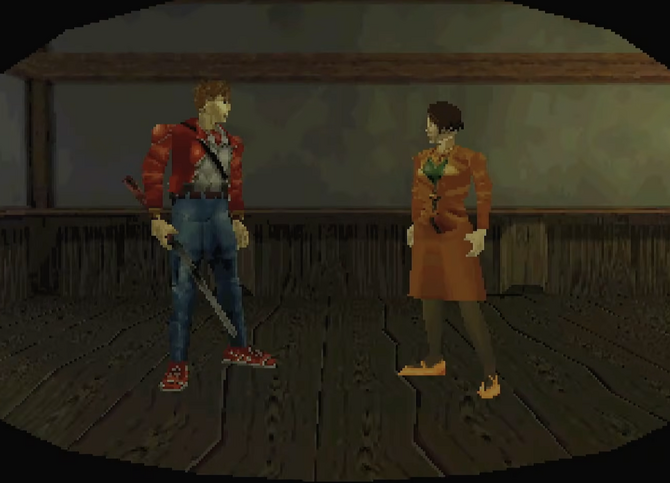
At first glance, this system may seem quite unconventional, but it actually works exceptionally well with the first-person perspective.
This is because exploring a dimly lit Western-style mansion makes it easy to lose track of enemies and difficult to survey your surroundings.
Therefore, rather than conveying the information that “health is running low” through a number, the game alerts the player to physical danger by actually restricting their “field of view”—a method that is very intuitive and easy to understand.
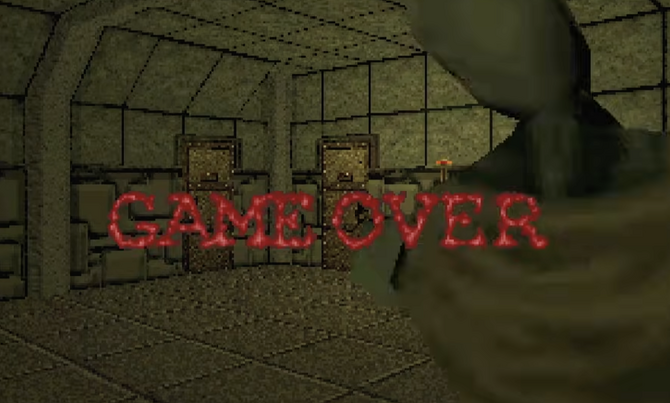
That said, compared to the highly polished UI and refined systems of *Resident Evil*, I can’t help but feel this one comes across as a bit rough around the edges.
However, I think the game’s attempt—in its own way—to align “what the protagonist sees” with “what the player sees” isn’t a bad approach to conveying fear in a horror game.
◆Return to town to buy items at the “Shop,” then head back to the mansion
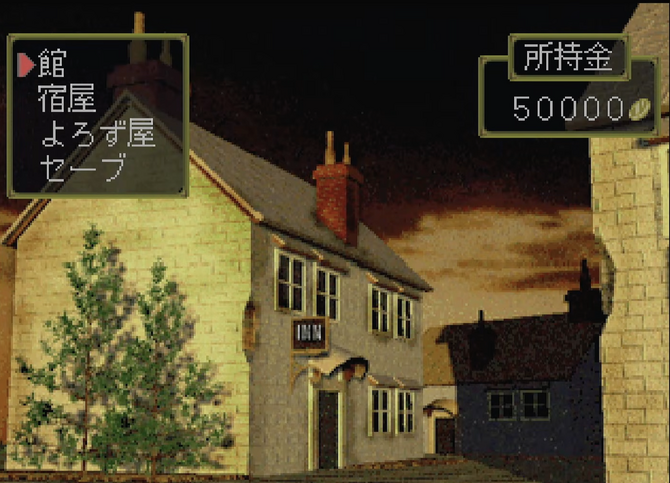
The structure of moving back and forth between the exploration area and town is another unique feature of this game.
Returning to town from the dangerous mansion allows you to buy and sell supplies, rest, and save your progress. You can purchase ammunition and healing items to prepare for your adventure, then head back out to the next area.
Unlike in *Resident Evil*, where you can simply pick up consumable items, the game design is more akin to using a safe base as a staging ground for “expeditions” into dangerous zones.
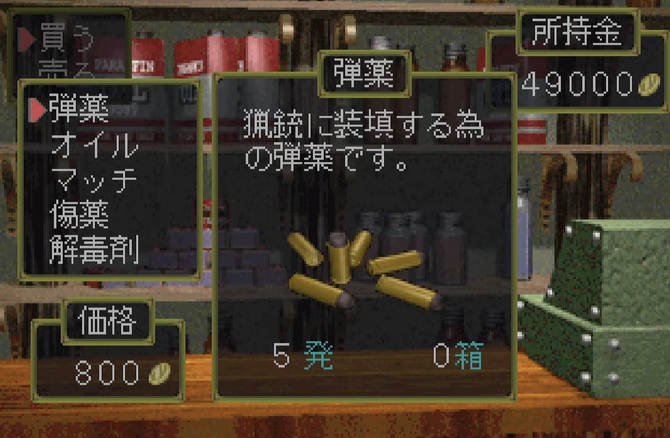
As a result, the gameplay has a somewhat RPG-like feel to it. The structure, which clearly separates the base from the danger zones, adds a unique sense of adventure to the exploration in this game.
◆ A Unique “Mansion Adventure” Unlike Anything in *Resident Evil*

Looking back at *The Unpublished Diary*, what’s interesting is that while it chose a setting similar to the contemporary *Resident Evil*, it didn’t simply follow in the footsteps of that successful franchise.
You navigate a dark mansion from a first-person perspective; without a light source, you can’t fully explore, and accumulated damage is reflected directly in your field of vision—or rather, your eyelids themselves. In this environment, “how to check what’s out of sight” becomes even more important than defeating enemies.
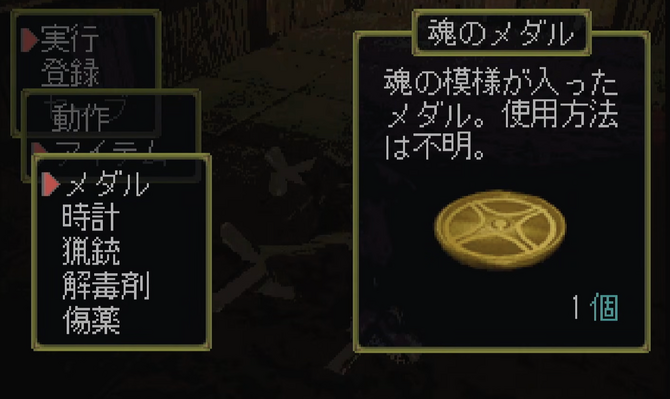
Of course, there are plenty of aspects that feel difficult to play by today’s standards—such as the unique controls, the difficulty in aiming, and the cumbersome light management. However, even including those inconveniences, the concept of directly linking the player’s field of vision to the protagonist’s situation reflects the trial-and-error spirit unique to the early days of the PS1.
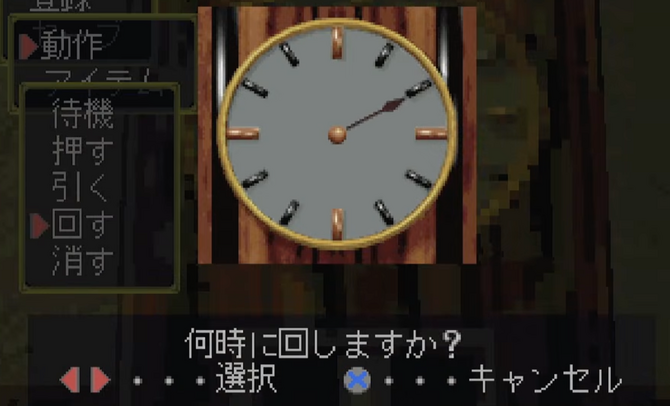
If *Resident Evil* was a game that “showed” horror through fixed cameras and cinematic direction, this title placed the player directly in the darkness, forcing them to confirm with their own eyes what lay ahead.
Starting from the same “mansion horror” genre, it sought to explore a completely different kind of gameplay. That, precisely, is the appeal of *The Unpublished Memoir*, and it’s a title that remains worth revisiting even now, some 30 years later.