Ollie Bader, a subculture journalist, has become known to many Japanese people as “the foreigner who knows way too much about robot games and robot anime.” His name has appeared not only in international publications like *Forbes* but also, in recent years, as a contributor to the official *Mobile Suit Gundam* website. He is also a game creator who has worked on various titles, including *Fortnite* and *Gears of War: Judgment*.
In this article, we’d like to share a glimpse of his perspective and aesthetic sensibilities regarding “robot games and robot anime” through his writing.
How “Mobile Suit Gundam: One Year War” Was Ahead of Its Time
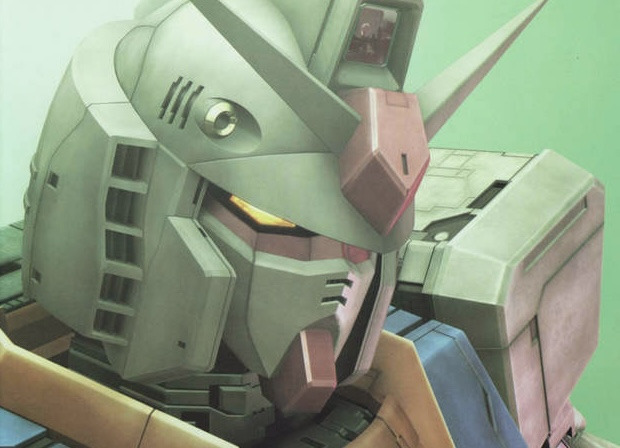
About 20 years ago, Namco produced a game based on the One Year War from the original *Mobile Suit Gundam*. While it featured some fun rail-shooter sections, its basic controls and camera system for mecha combat were years ahead of their time.
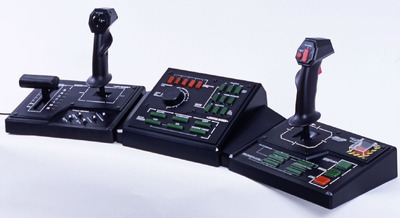
At the time, for some reason, every mecha game seemed intent on reinventing the controls from scratch. Behind this was the belief that, in order for players to feel as though they were “actually piloting a mecha,” a dedicated—and quite complex—control system was necessary to convey that sensation.
As a result, nearly all Gundam and mecha games prior to that adopted their own uniquely designed control schemes. Although these were intended to achieve essentially the same functions, the actual feel of gameplay varied significantly from game to game.
Adopting Western-Style Controls in Japanese Mecha Games

The basic controls in *Mobile Suit Gundam: One Year War* had their roots in overseas games and adopted the control scheme that was common in Western FPS and TPS games at the time.
Specifically, the left analog stick was used for moving forward and backward as well as moving sideways, while the right analog stick was used to look up and down and turn left and right.
This control scheme was extremely widespread in Western games, with many of its roots tracing back to titles such as *Halo* (2001).
As a result, even gamers unfamiliar with Japanese mecha games were able to pick up the controls and start playing almost immediately, with little confusion.
Consistently Maintaining That Crucial “Sense of Weight”
One of the great things about this game is that, while adopting control schemes used in overseas games, it treated the mechs properly as mechs and firmly maintained their overwhelming sense of weight.
In other words, while movement and camera controls were intuitive and easy to handle, when moving using boost, players had to be mindful of the Mobile Suit’s weight while maneuvering.
This added a highly compelling element to the game, creating a more nuanced gameplay experience than typical Western FPS or TPS titles.
What’s important here is that, rather than adopting special, dedicated controls to convey the unique characteristics of mechs, the game expressed this through the behavior and handling of the mobile suits themselves.
Never Released Overseas
Despite featuring a control scheme that would have been very well-received by Western gamers, *Mobile Suit Gundam: One Year War* was never released outside of Japan.
Furthermore, the game was treated very poorly in Japan as well, viewed as if it were destined for the clearance bin.
I feel this was particularly unfair, as the actual gameplay was exceptionally well-crafted and masterfully realized both ground and space combat using the same control scheme.
In various previous *Gundam* games for the PlayStation 2, ground battles and space battles tended to be released as separate titles. That said, while Capcom’s titles did feature both ground and space battles in a single game, their control schemes were far simpler.
In other words, the tragedy of this game lies in the fact that, despite its excellent controls and high-quality design, it was never released to the very audience that sought out and appreciated these very elements.

Not the first, but probably the best
Of course, *Mobile Suit Gundam: One Year War* wasn’t the first Japanese mecha game to attempt to incorporate the control schemes used in Western FPS and TPS games. About a year earlier, *Armored Core Nexus* had made a similar attempt, which ended up confusing many Japanese players.
However, in the case of *Armored Core*, the series’ unique control scheme from previous entries was largely retained, so it couldn’t be said that the new control system had been fully and successfully integrated.
That is precisely why, when *Mobile Suit Gundam: One Year War* was released, the entire control system was redesigned to align with the control methods adopted overseas. As a result, it achieved a far more consistent and cohesive control scheme overall.
Today, nearly all mecha games adopt this control scheme
Ironically, while *Mobile Suit Gundam: One Year War* wasn’t very successful in Japan and wasn’t even released overseas, the control scheme adopted by this title is now incorporated into nearly every mecha game produced in Japan.
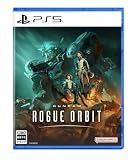
Games such as *Armored Core VI: Fires of Rubicon* and *SD Gundam Battle Alliance* also employ very similar control schemes, and the upcoming *GUNDAM ROGUE ORBIT* will utilize the same control method as well.
When you think about it, it may well be the developers of *Mobile Suit Gundam: One Year War* who have the last laugh. Although their work was not fully understood or appreciated at the time, their approach is now widely used in the vast majority of modern mecha games.
Incidentally, Mr. O’Leary is reportedly looking for a studio or collaborators to create a “robot game.” Studios or organizations interested in creating a “robot game” with Mr. O’Leary are encouraged to contact him directly via the profile link at the end of this article.