


This series features interviews with the developers of intriguing new indie games. In this installment, we present a mini-interview with the developers of *Mandate Order*, a wartime city-state building simulation developed by Digital Sky, which entered Early Access for PC on August 12.
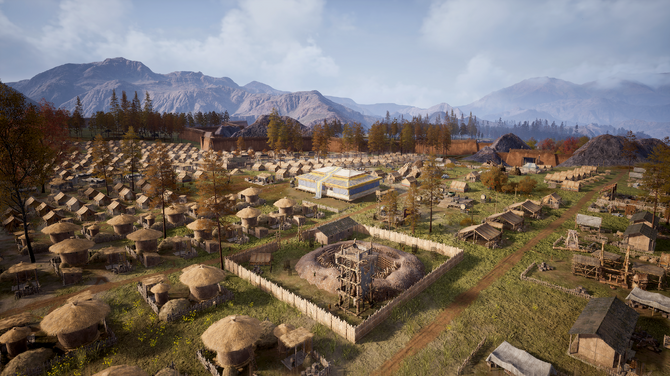
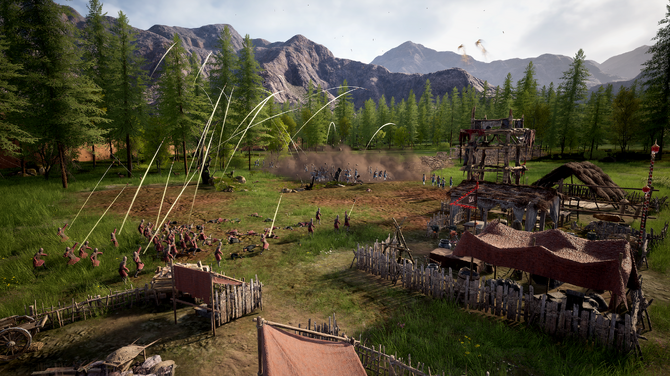
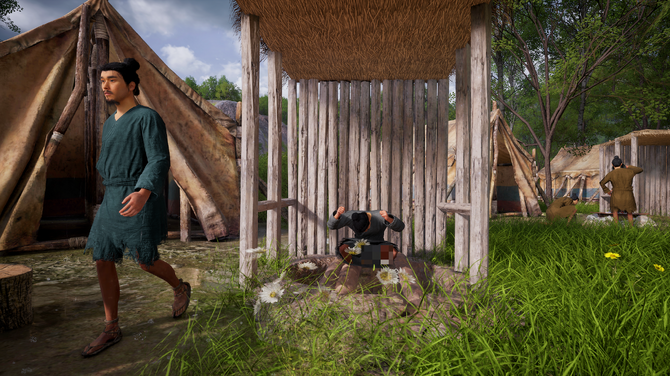
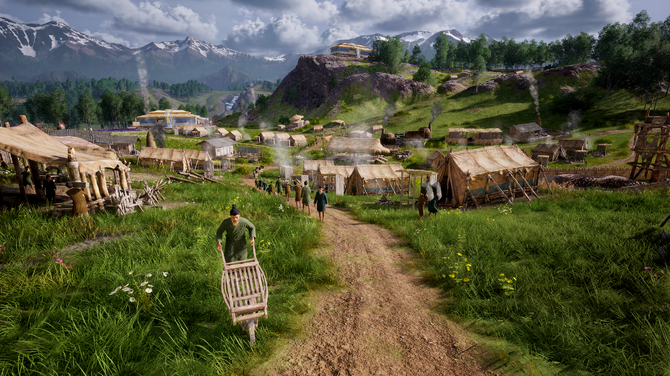
Set during the Spring and Autumn and Warring States periods, this game is a wartime city-state building simulation. Players start from a frontier outpost and build a wartime city-state where production, civilian life, governance, and warfare are intricately intertwined.It integrates the management of an ancient Eastern city-state with warfare into a single system, and its defining feature is that players are constantly forced to make trade-offs between production, civilian life, governance, and warfare. The game is now available in Japanese.
“Mandate Order” is currently available via Early Access for 2,250 yen.
――First, please introduce yourself. What’s your favorite game?
Niko: Hello, I’m Niko, the producer of *Mandate Order*, and I’m directly involved in the game’s development and design.I’ve played a lot of Japanese games since I was a child. The very first game I got hooked on was *Romance of the Three Kingdoms II: The Continent of the Overlord* for the Famicom. Since Japanese games hold a very important place in my early gaming memories, being able to introduce a title I’ve helped develop to Japanese players means a great deal to me.
It’s really hard to pick just one favorite from all the games I’ve played so far. I like action games like *Devil May Cry*, and I also enjoy playing historical simulation games from Paradox Interactive.The controls and the pace of combat in action games are appealing, and the depth of long-term strategic planning and decision-making in simulation games is just as captivating. For me, playing a variety of genres is an essential process for continuing to discover the diverse forms of enjoyment that games have to offer.
――Could you tell us about the key features of this game? Also, how did you come up with the idea for it?
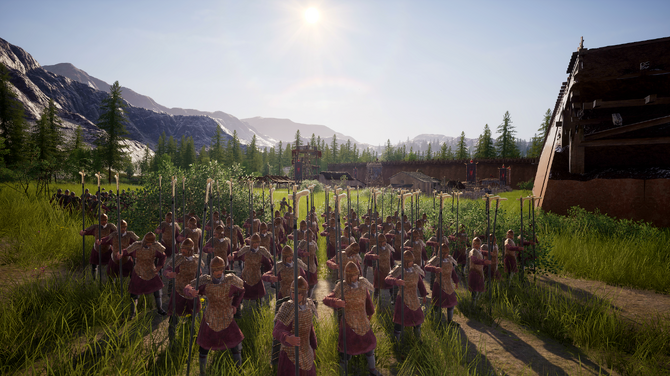
Niko: For me, one of the most interesting aspects of *Mandate Order* is how closely “city development,” “people’s daily lives,” and “preparations for war” are intertwined. How you arrange farmland, workshops, warehouses, and roads affects not only production and transportation but also whether that city-state can withstand the ravages of war.When conscripting soldiers, you must also consider whether the city’s functions can continue once workers become soldiers. In that sense, the decision to fight begins the moment you till your first field or build your first city wall.
This idea stemmed from our interest in the city-states of ancient China. It is rooted in the question: “In an era of turmoil, how did cities sustain their people and defend themselves?”Furthermore, the philosophies of the “Hundred Schools of Thought” from the Spring and Autumn and Warring States periods have influenced the systems featured in this game, such as the “scholar-officials” (Translator’s note: a custom that spread during China’s Warring States period, in which a ruler would host and support talented individuals as guests in exchange for their assistance), policies, and diverse governing styles.We wanted to reflect these historical and cultural elements in the actual in-game decisions, so that each player’s city-state would develop with its own unique character.
――Were there any works that influenced the development of this game?
Niko: Yes, there are. In addition to being influenced by classic historical simulations and strategy games depicting ancient battles, we also drew significant inspiration from the early building mechanics of *Mana Road*.Watching a barren piece of land gradually transform into a settlement where people live, work, and go about their daily lives is, in itself, incredibly captivating and compelling. And we wanted to delve deeper into the “decisions and pressures surrounding defense and warfare” that arise precisely because players have grown attached to that settlement.
Furthermore, the history of ancient China, castle architecture, agricultural life, and the philosophies of the “Hundred Schools of Thought” are also key sources of inspiration for *Mandate Order*. For example, the ideals regarding governance and development espoused by various schools of thought have been incorporated into the game’s system of courtiers and policy-making.Throughout the entire development process, we have continually sought ways to refine these elements into game systems that players can intuitively understand, actively utilize, and enjoy through diverse trial and error.
――Could you share one episode that left the strongest impression on you during the development of this game?
One of the events that left a particularly strong impression on me during the development of *Niko* was the process of optimizing resource placement on the map. *Mandate Order*’s 4km × 4km map contains over 100 resource nodes, each with 4 to 5 different generation patterns.We had to position these correctly in accordance with the terrain and adjust them to the appropriate spacing—neither too close nor too far apart. Previously, designers made these adjustments manually within the game engine, but the process was extremely difficult due to heavy processing loads and model glitches. It was also difficult to objectively verify whether the placement balance across the entire map was as intended.
Consequently, one of the designers built a simulation tool powered by AI that runs on a web interface. This tool can test as many as 10,000 resource placement scenarios in a single run.Designers could now verify results and adjust parameters online, and once a satisfactory placement pattern was achieved, they could import the data into the game engine. This significantly streamlined the verification process—which had previously required an enormous amount of time and effort—and freed up time to experiment with even more placement patterns.
This development epitomizes my belief regarding what technology should bring to game development: “reducing repetitive tasks and freeing up more time for creators to focus on brainstorming and trial and error.”If a task that used to take 10 days can now be completed in 3, I want to invest the time saved into testing and exploring new forms of expression to create better games.
The pace of AI’s evolution since the start of this year has been remarkable, and it’s bringing tremendous benefits to game development. I’ve come to realize that AI’s greatest value lies in taking on tedious, time-consuming, and repetitive tasks, thereby freeing up time for developers to engage in deeper thinking and test their ideas.
――What kind of user feedback have you received since release? Please share any particularly memorable comments.
Since launching Niko Early Access, we’ve received positive feedback regarding the ancient Chinese setting and the combination of city-building and warfare, but we’ve also received critical comments regarding gameplay, the logistics system, performance, and the volume of content. Players are watching our development progress closely and pointing out very clearly exactly what needs to be improved and how.
There’s one Japanese review in particular that stuck with me. While that player recognized the game’s potential, they pointed out that “the supply chain is hard to understand, and the functions and controls of each building are unclear.”This feedback reminded me of an important truth: “Even a deep and complex system isn’t necessarily easy for players to understand.”If players cannot understand why supplies aren’t arriving or why a building has stopped operating, it’s difficult for them to make appropriate judgments or adjustments based on the situation. I believe that our key development challenge moving forward is to help players identify and understand the problems they’re facing on their own, and to support them in finding solutions.
On the other hand, we are very pleased that, overall, many players have responded positively to the game. As of the time of this interview, the user rating on Steam remains at a high 81%, which is a tremendous source of encouragement for our development team.
――Taking user feedback into account, could you tell us about your plans for future updates?
Niko: We will continue to work on improving issues related to the core gameplay experience, such as performance, stability, unit pathfinding, and the clarity of the interface and system messages.
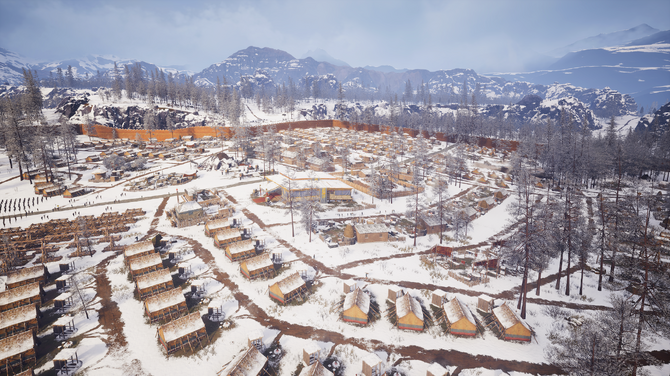
In the September 24 update, we implemented the first phase of the building upgrade feature.Initially, this feature applies to 12 types of buildings, providing players with new ways to develop their city-states. We’ve also added building decoration items and a “Photo Mode” for those who want to customize their cityscapes to their liking or observe their settlements up close and take screenshots.
Furthermore, a major highlight of this update is the introduction of the “Loot System.” Players can now collect resources on the battlefield and bring them back to their base, allowing them to directly channel the fruits of combat into their city’s economic development.
In the long term, we plan to add new maps, expand production and development options, and establish more challenging objectives for the mid- to late-game. We will flexibly adjust our priorities based on player feedback, and we will announce the final content details and implementation schedules sequentially through official announcements.We intend to deliver visible improvements with each update while also communicating clearly and transparently about the challenges we are currently addressing.
――Could you tell us about the Japanese language support for this game? What was included in the implementation, what were the challenges, and what has the reaction been like from Japan?
Niko: *Mandate Order* supports a Japanese interface and subtitles, but Japanese voice acting is not currently available. Of course, as an indie team, we are fully aware of our limitations when it comes to localization.We recognize that, because we relied heavily on translation tools during the initial multilingual localization process, some unnatural phrasing, contextual errors, and inconsistencies in terminology remain. Therefore, to enlist the help of players who have a deep understanding of the game, we’ve decided to publicly recruit volunteer localization proofreaders, including those fluent in Japanese.
The greatest challenge in localization is making both historical concepts and actual game rules easy to understand. Even if the same kanji characters are used in both Chinese and Japanese, their meanings and natural nuances are not necessarily the same.We want to ensure that players correctly understand both the historical context behind elements such as “scholars,” “the Hundred Schools of Thought,” “titles of nobility,” and “logistics,” as well as the roles these elements play within the game. In the Japanese reviews that have been published, while some players have praised the game’s potential, others have called for improvements to the UI, gameplay, and stability.
We sincerely hope to hear more specific feedback from our Japanese players. We also warmly welcome community members (with Japanese language skills) who can assist us with proofreading the localization, refining terminology, and polishing the explanations to make them more natural and easy to understand.If you’re interested, please feel free to contact us via email or let us know on our official Discord server. We would be delighted to work together with you to help evolve *Mandate Order* into a game that Japanese players can enjoy more comfortably and with less stress.
――Why did you use content generated by AI in this game, and how exactly did you implement it? Also, what are your feelings about generative AI?
Niko: As I mentioned briefly earlier, we’ve been incorporating generative AI since the early stages of development. I’ve been using a paid ChatGPT plan since the beginning and continue to do so today. Within the development team, we’ve encouraged members to learn how to utilize AI and effectively integrate it into their daily work.As disclosed on the Steam store page, some of the text, code, and art assets for the multilingual localization of *Mandate Order* include AI-generated content. Beyond just the content used in the game, AI is transforming how we solve day-to-day problems and how our team collaborates.
For example, when a designer encounters a bug, they first feed the relevant code to the AI and ask it to investigate the cause. If the issue—such as a configuration problem—is something the designer can resolve on their own, they make the correction immediately. Even when a programmer’s review is required, sharing the AI’s analysis results facilitates a smoother discussion.Programmers also utilize AI to review specifications and verify that there are no logical flaws or omissions.The resource allocation tool I mentioned earlier is another example of how designers have used AI to significantly improve their own workflows. Of course, AI analysis is merely a starting point; the root causes of problems and the results of corrections must be thoroughly verified on the development floor.
In my experience, the introduction of AI has improved the overall development efficiency of “Mandate Order” by at least 50%. However, the effects vary greatly depending on the nature of the work. While some tasks have achieved efficiency gains of several times over, others have seen improvements of only about 10–20 percent; this does not mean that every process has improved uniformly.
For me, the greatest value of AI lies in the fact that “the development team can conduct more trial and error within the same amount of time.” Even if a task that used to take 10 days is now reduced to 3 days, I would not cut the staff by 70%; instead, I would choose to use the remaining time to create more prototypes and explore new directions.The essence of game development lies in experimentation. I want to use the time freed up by AI to make design decisions, test the player experience, and refine the quality of our content.
――Is it okay to stream or monetize this game?
Niko: Of course. We wholeheartedly welcome and strongly encourage streaming and uploading videos of *Mandate Order* on platforms like YouTube and Twitch. We also officially authorize monetization through platform features such as ad revenue, memberships, and viewer donations.Whether it’s gameplay commentary, walkthroughs, reviews, or videos showcasing your own unique playstyle, we look forward to seeing creators share the game’s appeal in their own distinct ways. We’ll provide as much support as we can, so please feel free to contact us via email if you need assistance while creating content.
We’re especially eager to hear more candid feedback from our Japanese players—such as “What parts did you enjoy?”, “Which rules were difficult to understand?”, and “What aspects should be improved?” We also warmly welcome participation from the community to help proofread the Japanese localization and improve the wording. Please feel free to contact us at the email address listed above.
Furthermore, as a token of our gratitude to all the players who enjoy and support this game on a daily basis, we plan to distribute a “Free Music Pack” for *Mandate Order* at an appropriate time in the future. We’ll announce the details as soon as everything is ready.
――Finally, please share a message for our Japanese readers.
Niko: Thank you so much to everyone in Japan who has shown interest in *Mandate Order* and the historical era we’ve chosen as our setting.If you enjoy building a city from the ground up, uncovering how production and logistics support people’s lives, or organizing defensive formations and commanding an army, you’re sure to find enjoyment in this game.Even if you’re not familiar with the “Spring and Autumn and Warring States Periods,” we hope that a single field, a single workshop, and the growing castle walls will serve as your first step into this world.
Watching the settlement you’ve built with your own hands grow, and doing everything in your power to protect it… I’m truly looking forward to sharing that experience with all of you. *Mandate Order* is still in Early Access, and there are still many challenges ahead, such as expanding content, improving gameplay, and enhancing the quality of localization.
Please share your feedback with us—whether it’s about what you enjoyed, what was confusing, or how you’d like to develop your own city-state. We look forward to seeing what kinds of cities you build and the choices you make along the way.
――Thank you very much.
◆ About “Spotlight on Indie Mini-Q&A”
This series features email interviews with indie developers about their games shortly after release. To ensure regular updates, we’ve standardized the questions with the goal of sharing the perspectives of as many developers as possible. Please also enjoy our archive of over 1,000 other interview articles.
