


"CRITICAL REFLEX," a publisher known for horror games and other unconventional titles such as *Mouthwashing* and *No, I'm not a Human*, showcased a demo of its upcoming survival horror game *Drowned Lake* at the Tokyo Game Show 2026.
This “fishing survival horror” game centers on three men and women who arrive at “Drowned Lake” in search of “Bento,” a young documentary filmmaker who has gone missing.
In this article, we’ll cover the game’s opening sequence and present an interview with developer Ana Vitória Leão Machado.

The tension of slowly spotting “something” in the dark lake heightens the fear
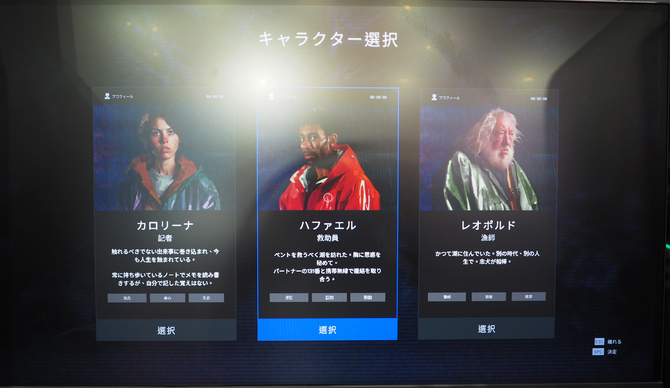
When you start the demo, the character selection screen appears. You can choose from three characters: “Carolina,” a reporter; “Rafael,” a rescue worker; and “Leopoldo,” a fisherman. Each character has their own background story, accompanied by three keywords. For this playthrough, I selected “Carolina,” the reporter.
Carolina is holding a video camera and appears to be recording what’s happening on the lake. It seems the story begins with her watching that footage. She boards a boat and heads straight across the dark lake until she spots a church, then slowly enters it.
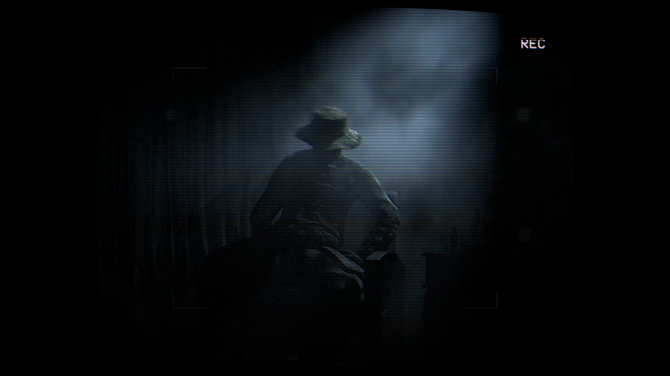
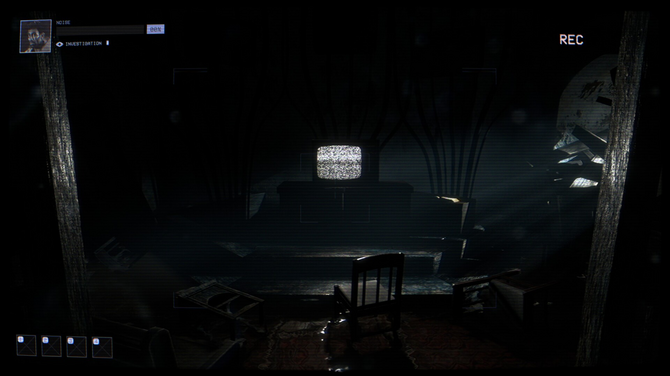
Inside, however, there is nothing but a solitary television set showing nothing but a sandstorm. Upon investigating, eerie footage begins to play, accompanied by a narration. The content is cryptic; while the full picture isn’t clear yet, it seems to hold the key to uncovering the truth as the story progresses.
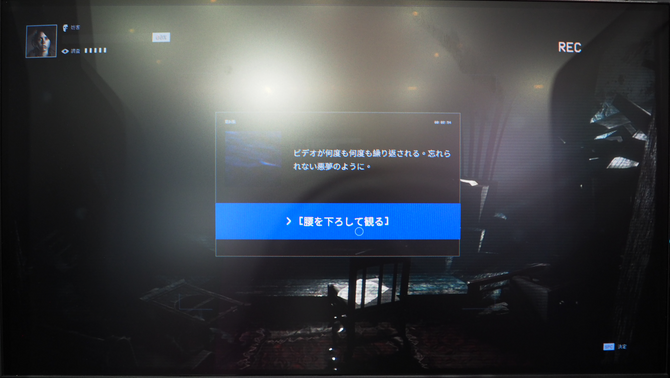
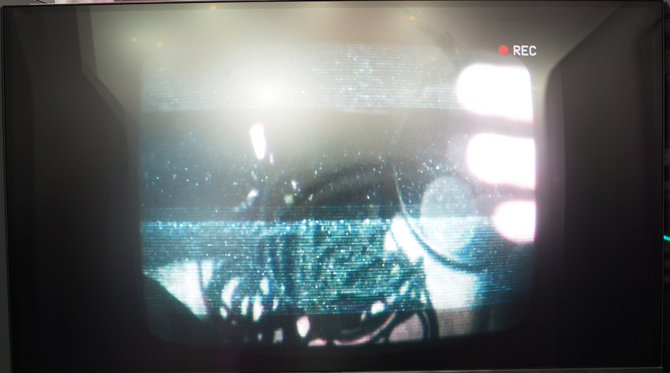
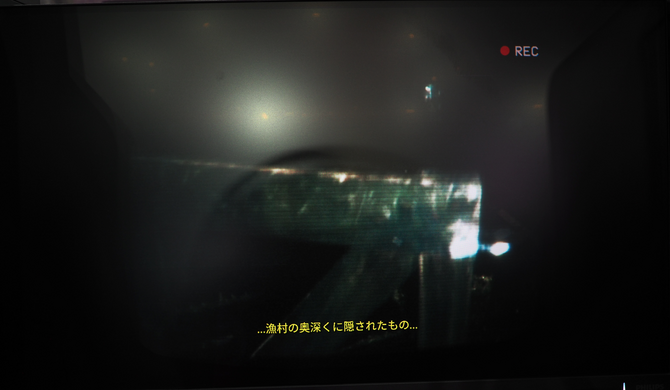
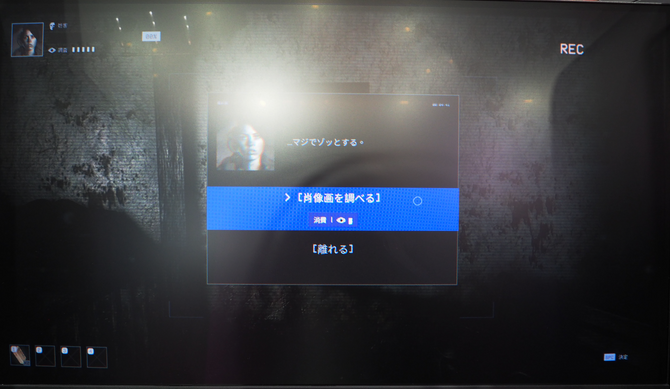
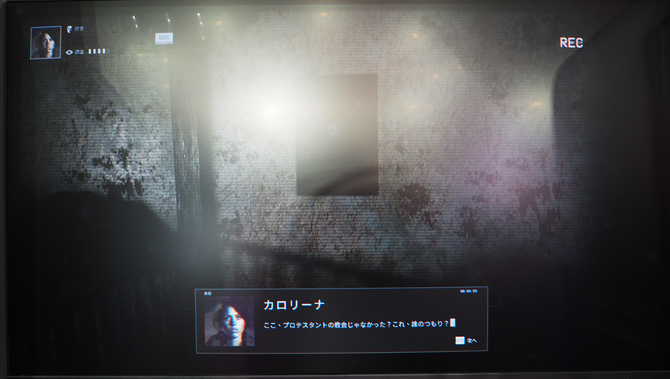
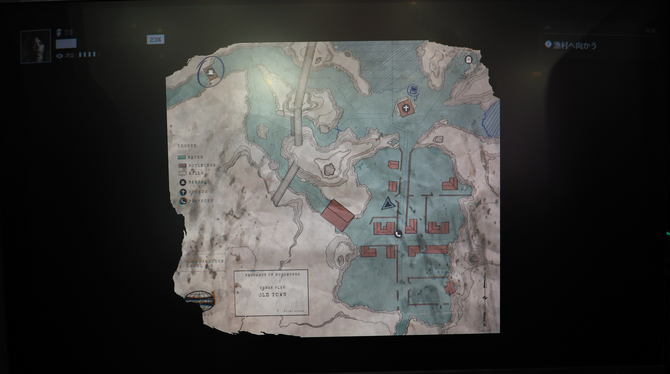
After watching the footage, I found myself clutching a “Map of the Lake” in my hand without even realizing it.I’d love to head straight to the lake, but when I take a quick look around the church, I notice a strange painting on the wall. When I try to examine it, a message appears stating that one unit of the eye icon gauge in the upper-left corner will be consumed. Since examining certain items consumes gauge units like this, it seems I’ll need to proceed while keeping an eye on my remaining gauge.
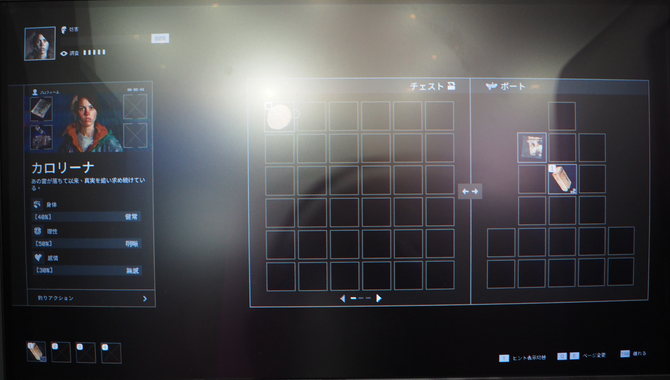
There also appears to be an inventory system for managing items, where you can check parameters such as physical health, sanity, and emotions. Careful gameplay is required to ensure these parameters don’t drop to zero.
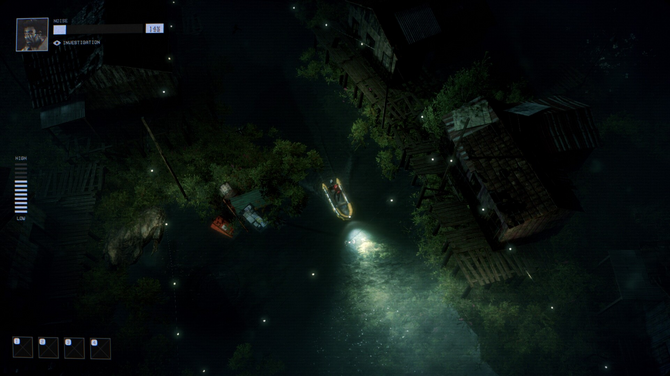
Leaving the church behind, I head for the lake. At the lake, the view shifts to a top-down perspective, and you steer a boat. The controls aren’t particularly difficult, but you need to be mindful of inertia; if you’re not careful, you’ll crash into houses or barricades. Collisions cause the interference gauge in the top-left corner to fill up, so you’ll want to navigate with caution.
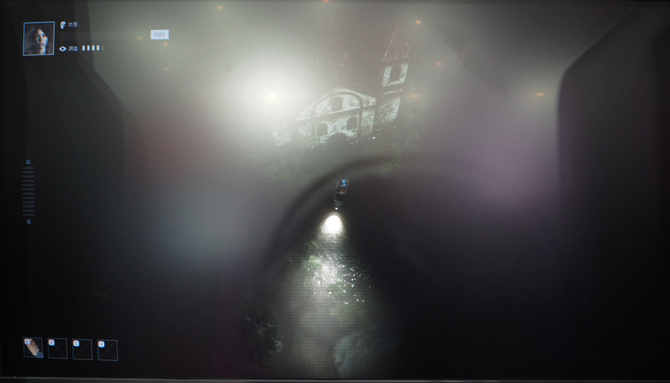
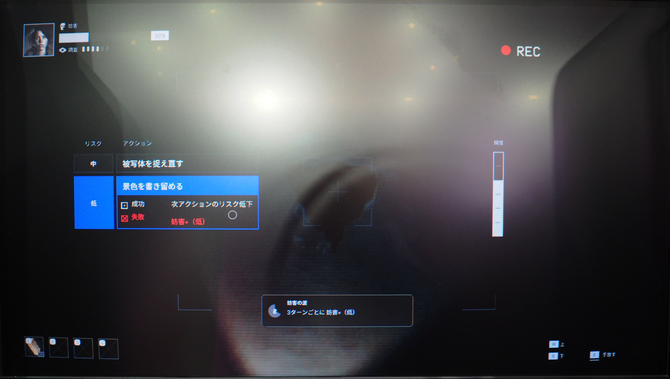
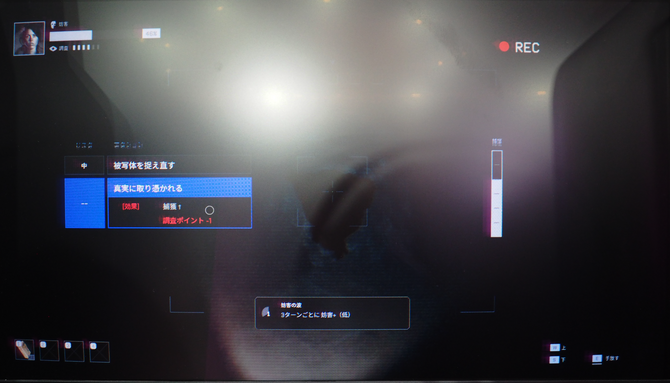
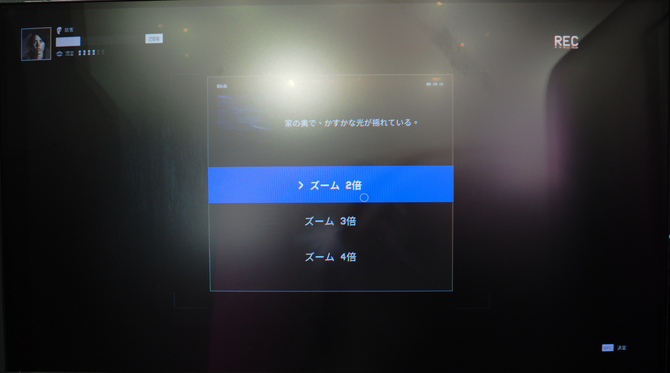
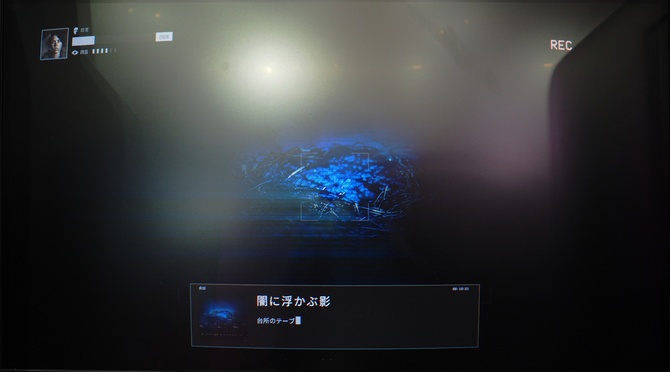
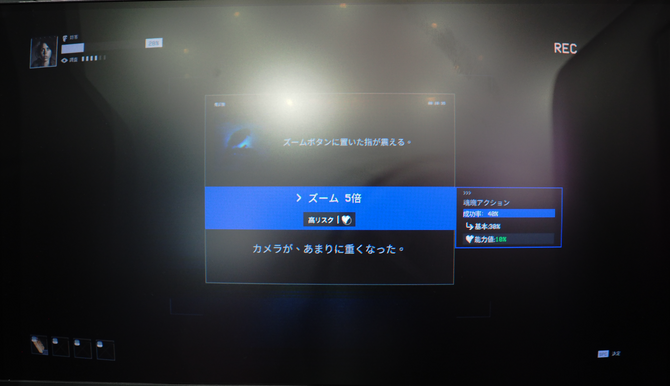
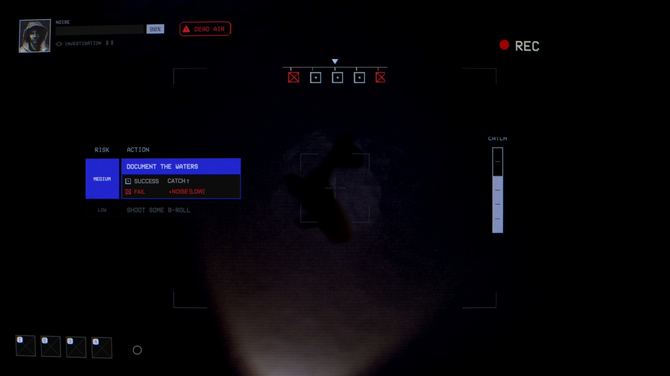
There may be “something” lying on the lake; some items can be picked up simply by examining them, while others require careful “observation.” In such cases, two options will appear, and you must choose one while considering the level of risk and the impact on your stats.The tension of getting closer to “something” with every action you take, combined with the thrill of whether your risky moves will succeed or fail, is so intense that you might find yourself forgetting to blink.

After exploring for a while, you discover an item that seems to be connected to the missing “Bent.” Suddenly, a nearby payphone starts ringing on its own.Tentatively, you approach it by boat and pick up the receiver—it turns out the person on the other end is an ally. When you call them, they’ll give you hints or save your game for you.
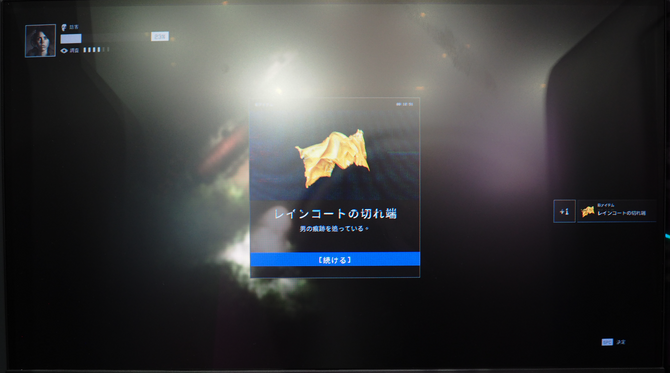
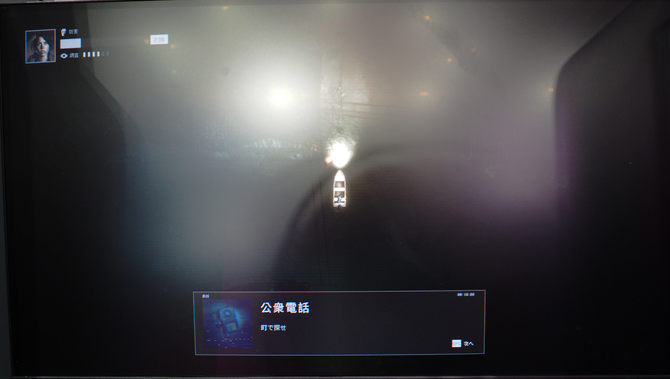
The lake is dark and it’s easy to get lost, but since your current location is displayed on the map, notes have been left behind, and you also have hints from the payphone, you’re unlikely to find yourself at a loss, wondering what to do next.
The tension when zooming in on “something” to reveal its true nature, the uneasiness of exploring the dark lake by the light of a flashlight, and the atmosphere where the mystery of this place gradually unfolds as your health gauge depletes.It was a fascinating demo that left me wondering what the truth behind this incident is, what lies buried in this land, and how the stories differ among the three characters.
The Source of Fear Lies in the Eerie Atmosphere and Ambience—An Interview with the Developers
――Thank you for joining us today. How far along is development at this point?
Ana Vitória Leão Machado (hereinafter Machado): We’re currently in the final stages of development. Most of the game is already complete, and we’re now polishing the game and conducting large-scale playtests as we prepare for release.
――The game begins with the search for a missing young documentary filmmaker. Based on the trailer and other materials, is there a connection to your previous title, *TELEFORUM*?
Machado: Yes, the story features multiple characters. Set against the backdrop of a lake and a submerged town, three characters attempt to uncover what happened to “Bento.” As they explore the lake, the events unfolding there—as well as truths about themselves—gradually come to light.
――Do the events and conversations differ for each of the three characters?
Machado: That’s right. The three characters are a fisherman, a reporter, and a rescue worker. Each has distinct gameplay elements—for example, their inventory systems and how they operate boats differ.
Since their abilities differ, their movement speeds also vary. Furthermore, they each have distinct backstories. For instance, the fisherman has a story where he “once lived in the village,” so the challenges he faces differ from those of the other two. In short, you can enjoy the game from three different perspectives. Depending on which character you play as, you’ll experience different aspects of the game.
――Since playing as all three characters offers a different experience, you’ll be able to enjoy the game all three times, right?
Machado: Absolutely—it’s as if you get to see different facets of the story through each character.
――Were there any challenges during development, or aspects you were particularly particular about?
Machado: As for fishing, we didn’t want it to be just a gameplay system, so it took a while to finalize. We wanted it to function as a narrative element as well. We wanted the items you can obtain to not only be relevant to the story but also influence gameplay, so balancing that was a challenge.
Within a system where each character’s unique stats affect their actions, we had to ensure that items influenced those stats, advanced the story, and incorporated an element of risk… Striking that balance was a bit of a challenge, but when we finally got it right, it was incredibly satisfying.
――I hear this game is inspired by Brazilian folklore. Could you give us some examples?
Machado: As is common in Brazil, there have been several environmental accidents, such as those involving dam construction. The accident at Burmajinho was particularly notorious. It’s not uncommon for small fishing villages to be situated near such facilities. We drew our themes from that backdrop.
――“TELEFORUM” was also a game with visuals that evoked a sense of “reality,” such as by incorporating live-action footage, and this time as well, not only the visuals but also the themes deal with real-world social discontent. What are your thoughts on exploring these themes?
Machado: Well, speaking of *TELEFORUM* and *Drown Lake*, these games deal with dam construction and the towns destroyed as a result.As with our previous work, we’ve been greatly influenced by “found footage” films. We place importance not only on the visuals but also on the themes, and we’re exploring those themes through the medium of games.
――I had a chance to play a demo earlier, and even though there weren’t any ghosts or monsters, it felt eerie, and there was a sense of dread because you never knew what might appear.
Machado: That’s right—we generally don’t incorporate what are commonly called “jump scares.” We simply don’t favor that approach. The source of fear lies in the eerie atmosphere and sense of unease.
In fact, our company name, “Monumental Collab,” derives from the phrase “Monumental Horror.” This refers to images that, once seen, are deeply etched into your mind and refuse to fade—like the twin girls in the movie *The Shining*, for example.However, it’s not necessarily the same kind of horror as in that movie; rather than something that suddenly jumps out to startle you, it’s a fear that lingers deeply in your mind—a sense of dread emanating from the location or situation itself.
――You’ve been making horror games up until now, but what kinds of horror works—including those outside of games—do you enjoy?
Machado: Well, I think all the team members are die-hard horror fans. As I mentioned earlier, we often watch “found footage” style films, and we all liked *The Blair Witch Project* as well as Japanese films like *Circuit* and *Noroi*.Personally, I prefer the kind of horror that creeps up on you gradually, rather than just scaring you with jump scares. I always enjoy horror.
――What is it about horror that draws you in?
Machado: I think it’s because it provides catharsis.I enjoy watching something and experiencing a certain kind of “authentic emotion.” This is especially true when story elements are involved. Even in horror, it’s not necessarily “what’s on screen” that’s scary. In many cases, there are hidden meanings or metaphors behind it, and I really love those aspects.
――Finally, please share a message for Japanese users who have added this title to their wish lists and are eagerly awaiting its release!
Machado: *Drowned Lake* is designed to be enjoyable even for those who aren’t big on horror. It’s not the kind of horror that relies on elements typical of slasher movies or sudden jump scares; instead, it offers a unique atmosphere and a different kind of fear. Since we drew a lot of inspiration from Japanese films during production, I’m sure everyone in Japan will enjoy it as well.
――Thank you very much!
*Drowned Lake* is scheduled to be released soon for PC (Steam).



