


CEG REVIEW SYSTEM v1.96
C:\TOWNFALL\REVIEW> ARTICLE.EXE
[██████████████████░░] 90%
READING CRTXT SIGNAL... OK
Welcome to “SILENT HILL.”
In the past, what awaited those who ventured into this series were the indigenous religions rooted in the fictional town of “Silent Hill,” as well as the sins and traumas carried by those who found themselves lost there. These manifested as monsters and nightmares, and at times even transformed the town itself to greet its visitors.
However, in the “SILENT HILL” series, which was rebooted in recent years, its direction has begun to shift little by little.The series is now turning its attention to the scars already etched into real-world locations and eras, as well as the memories of sin left behind there. By unearthing these elements and transforming them into new forms of horror through the “SILENT HILL” narrative framework, the series is shifting its creative focus toward such stories.
In *SILENT HILL: The Short Message*, set in Germany, the story depicts the isolation and suicide of young people living in a stifling society, as well as their craving for validation through social media.In *SILENT HILL f*, set in 1960s Japan, patriarchal values and the ideal of womanhood demanded of young girls by their community gradually erode their lives.
Memories are sometimes etched into the land more deeply than the people who once lived there.

C:\TOWNFALL\REVIEW> TREE
├─ 01 土地に刻まれたトラウマ
├─ 02 姿勢ひとつ、物音ひとつが生死を分ける
├─ 03 アナログSFの美学
├─ 04 謎解きそのものが物語になる
└─ 05 セントアメリアが残したもの

┌─ [01] ───────────────────
│ 土地に刻まれたトラウマ
└────────────────────────
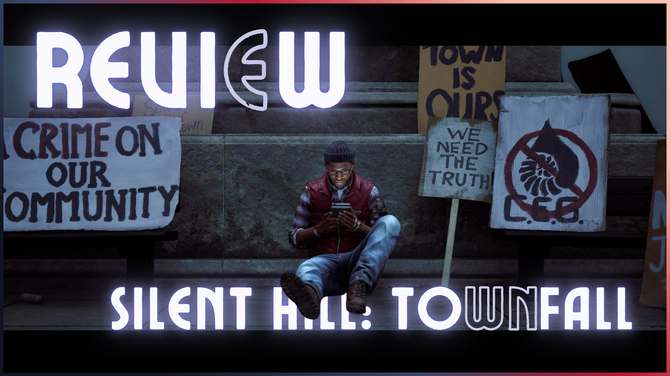
And in *SILENT HILL: Townfall*, we are taken to “St. Amelia,” a remote island off the coast of Scotland in the 1990s.St. Amelia was originally a small island where life revolved around fishing. However, in recent years, a massive corporation known as “C.E.G.” has moved onto the island and is pushing forward with large-scale development.
New industries and jobs have emerged, and the fishing village—which had been in steady decline—is being transformed into a vibrant industrial island. While this may seem like a welcome change for the island, it appears there are some who do not welcome this new future. Voices opposing C.E.G.’s development are rising throughout the island.

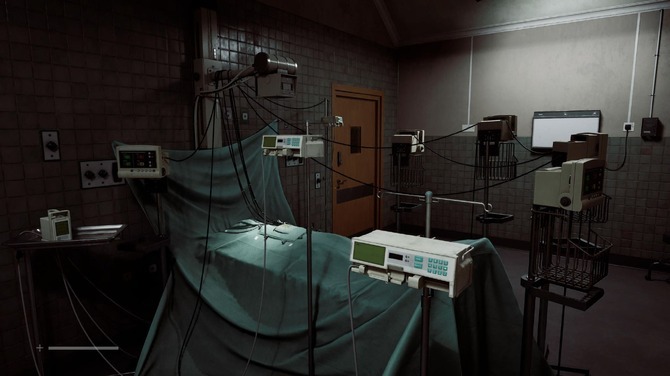
And that’s not the only problem facing St. Amelia. The island is also facing a shortage of medical staff, which seems to be casting a shadow over the residents’ lives.
A small community in decline, a healthcare system struggling with staff shortages, and redevelopment carried out under the guise of “saving” the island. In this game, these events—as memories etched into the land of St. Amalia—are gradually revealed through the eyes of the protagonist, Simon, who has washed ashore on the island.
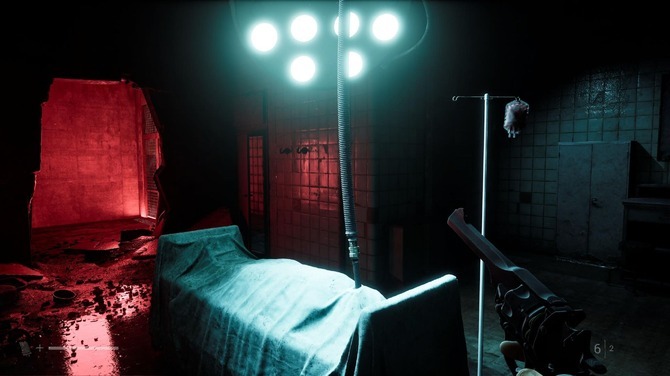
If you were to visit St. Amelia, the first thing to catch your eye would likely be the unique landscape enveloping the island. When one thinks of “SILENT HILL,” the thick fog that blankets the view in white has long been a symbol of the series. This time, however, we are greeted by a blue fog—somewhat cold, reminiscent of the ocean floor.
Both the desolate coastline and the dilapidated townscape seem to sink into that blue, as if seeping away.While retaining the series’ familiar fear that “something might be lurking beyond the fog,” St. Amelia is permeated by a sense of loneliness and stillness that differs slightly from previous “SILENT HILL” entries. No matter how far you look, you can’t grasp its true nature—that sense of the unknown is reminiscent of the movie *The Mist*.

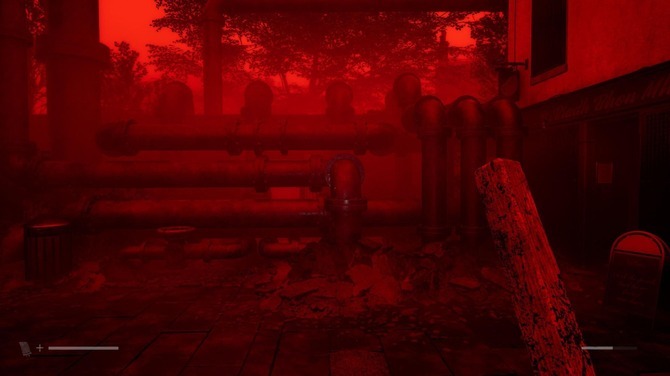
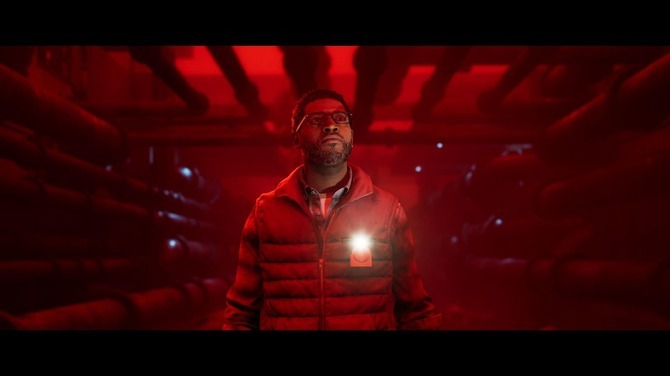
And piercing through that blue world like a foreign object is a red that resembles a warning color.As the otherworld arrives, the sky and fog turn red, and countless pipes and massive structures appear all around. The landscape, which until then had been that of a desolate island, gradually transforms into an inorganic space reminiscent of the interior of a massive factory.
In previous “SILENT HILL” titles, motifs such as rust, blood, and darkness signaled the shift into the otherworld. In this installment, however, it is cold blue and ominous red. By shifting between these two contrasting colors, the game visually highlights the boundary between reality and the otherworld.The island, which had been shrouded in blue, is gradually transformed into a completely different landscape by the color red. This striking transformation is another sight unique to this title.

Observing Saint Amelia’s situation and the striking use of color in the visuals offers a glimpse into the roots of the developer, Screen Burn Interactive.“Sevastopol,” a location in *Alien: Isolation*—a game on which Jon McKellan and others from the same studio once worked—was also a setting where a massive corporation discovered new value in a place in the midst of decline, deciding its future according to a logic separate from that of its residents.Although the objectives differ, one can sense their consistent interest in depicting the relationship between a land losing its vitality and the corporations intervening there.
When viewed in this light, the pipes and massive structures encroaching upon the island from the underworld take on a significance beyond mere otherworldly decoration. It’s as if St. Amelia itself is being incorporated into a massive industrial complex. People’s lives gradually change shape due to external forces, and eventually, even the landscape of the land transforms.When walking through St. Amelia, one can’t help but naturally sense that sense of dread.
┌─ [02] ───────────────────│ A single movement, a single sound can mean the difference between life and death └────────────────────────
As mentioned earlier, the creators at Screen Burn include staff who worked on *Alien: Isolation*, led by Jon McKellan. That experience is evident in the gameplay; the tension of progressing through a stealth-focused, first-person perspective while avoiding enemies showcases the studio’s signature attention to detail.Roaming the various areas of St. Amelia are grotesque creatures hunting Simon. Meanwhile, the ammunition and melee weapons you can rely on are limited.
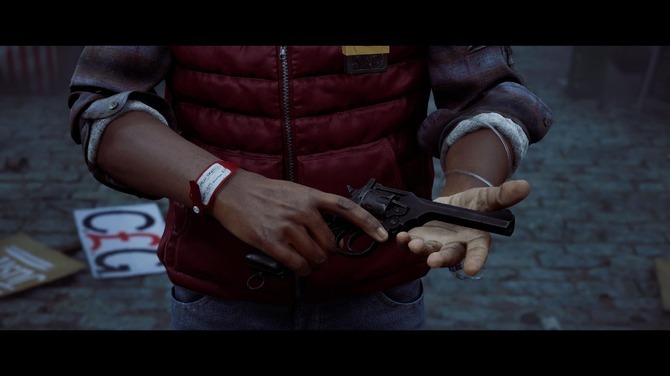
At least from the early to mid-game, confronting enemies head-on isn’t the best strategy. The basic approach is to avoid enemy sight, hide, and wait them out. Of course, you can hide in lockers, but you should also peek out from behind cover and move forward when they aren’t looking.Compared to previous games in the series, stealth plays a much bigger role in this installment.
There are essentially no “traditional” boss battles; it’s a game that places more emphasis on how to get through the level undetected than on defeating enemies.
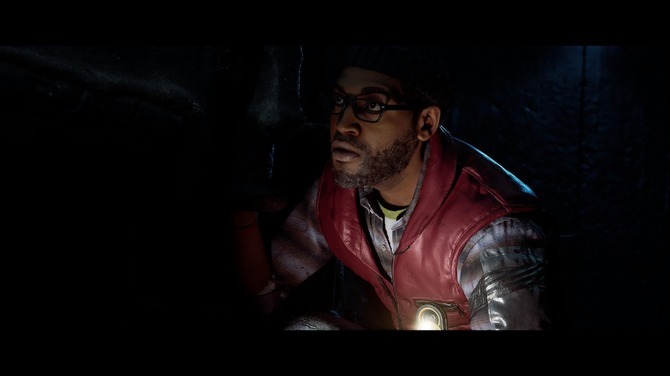
This is where the game’s “Peek” mechanic comes into play. While *Alien: Isolation* also featured a mechanic where you could lean out from behind cover—to the left, right, or above—to check your surroundings, this time the system offers even greater freedom. By holding down R1 and moving the left stick, you can finely adjust your posture, tilting your body up, down, left, or right while pivoting on the spot.
If you’re curious about what lies beyond the wooden fence surrounding a house’s yard, try stretching your body out just a little to peek over the top. If you spot a small gap in a fence or wall, you can zoom in on it to get a glimpse of what’s on the other side.Instead of simply sticking to predetermined cover points with the press of a button, you can find the perfect spot yourself—thinking, “If I move my body just a little more, I might be able to see.”
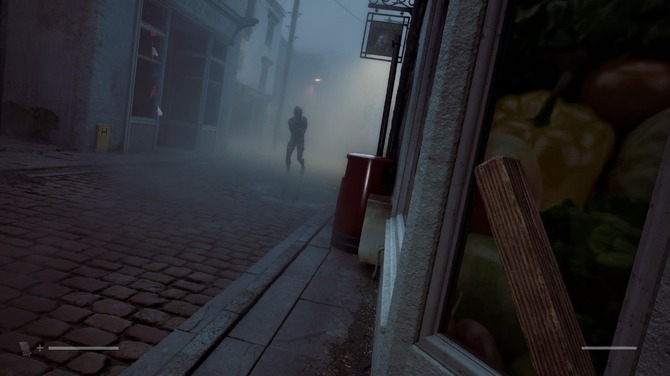
Furthermore, this control is also useful for hiding.Even in places where your body would stick out if you simply stood or crouched normally, by making subtle adjustments to your posture, you can squeeze yourself into a narrow gap to escape the enemy’s line of sight. If you lower yourself even further from a crouched position, you can hide by lying flat behind cover that’s only waist-high.
That said, just because it’s convenient doesn’t mean you should stick your head out too far. If you can see the enemy, that means they can see you, too. You can’t just peek out from behind cover to scout the area—to take a look, you’ll have to expose part of your body to danger.
“I just want to take one more peek.” “But if I stick my head out just a little more, I might get spotted.” In this game, even those tiny decisions contribute to the tension of exploration. Especially when you’re constantly in the enemy’s line of sight, the background music gradually intensifies, using sound to heighten the sense of urgency that you must hide quickly.
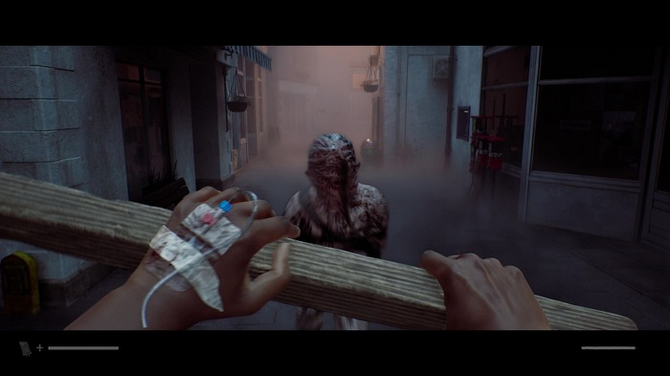

There are several types of creatures you’ll encounter in St. Amelia. Some have board-like objects impaled in their heads and close the distance in a flash with their swift movements. Others, while slow-moving, attack from a distance to hinder your progress. Each has its own preferred range and attack style, so you’ll need to adjust your tactics depending on who you’re facing.
That said, the way you deal with these creatures shares many similarities with previous “SILENT HILL” games. Rather than defeating every enemy to clear an area, you must move forward while managing limited supplies—sometimes fighting, sometimes avoiding confrontation. This is the rhythm of combat and exploration that has long been a hallmark of the series.
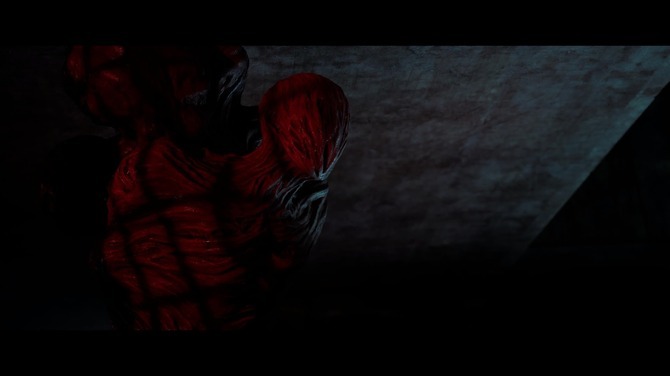
However, starting in the mid-game, an enemy appears that drastically changes this dynamic. Its name is the “Weight.”
There is no way to defeat a “Wait.” While attacking it can temporarily startle it and buy you time to escape, no amount of weapon fire can completely eliminate it. And perhaps the most troublesome aspect is its abnormally keen sense of hearing.
It reacts to even the slightest sound you make, changing its course as it approaches to pinpoint the source. You can’t simply rely on memorizing fixed patrol routes and slipping through the gaps between them. Even the slightest noise forces you to completely rethink the route you had planned.
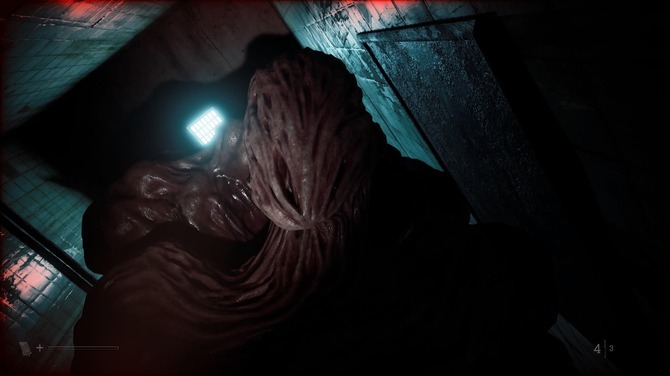
This role is similar to that of the Xenomorph in *Alien: Isolation*. While the Weight doesn’t move unpredictably throughout the entire area via ducts, there’s a similar sense of terror in the fact that “an invincible entity reacts to your actions and disrupts your planned exploration strategy.”
Furthermore, the Weyte doesn’t always appear alone. It may be prowling the same areas as regular creatures. If you try to quickly dispatch an enemy right in front of you with a steel pipe, the Weyte might hear the dull thud it makes and come after you. Situations like this can be a bit of a headache.

This stealth-focused gameplay doesn’t change significantly throughout the game. Still, the reason my first playthrough—which took about 20 hours—never felt monotonous was likely because the nature of the tension generated by exploration gradually shifted as the story progressed.

On the other hand, I felt the creature designs themselves were a bit underwhelming compared to previous entries in the series. Each creature’s appearance holds narrative significance, and once you understand the background, you can grasp the reasoning behind their designs.
However, the outstanding creatures in the series—including those in *SILENT HILL f*—possessed a charm that went beyond simply symbolizing the lore. They were eerie yet somehow beautiful. You wanted to look away, yet you found yourself wanting to look just a little longer. It was a unique, grotesque beauty where revulsion and mystery coexisted.

In that regard, the creatures in this game are a bit too straightforward. While their roles and backstories are easy to grasp, they lack that raw, otherworldly allure that clings to your senses the moment you lay eyes on them. If you’re expecting the series’ signature bewitching charm, you’ll likely find this title somewhat lacking.
┌─ [03] ───────────────────│ The Aesthetics of Analog Sci-Fi └────────────────────────
However, this does not mean that this work has lost its aesthetic attention to detail. Rather, I believe its focus has simply shifted slightly.


The Scottish landscape, shrouded in fog and the cold sea. Industrial art design featuring exposed ducts, pipes, and massive pieces of equipment arranged exactly as they would be in real-world use.And then there are the DOS-style computer terminals, monitors flickering with scan lines, rugged dials and switches, and the noise obscuring the visuals. All of this breathes with the strong passion for analog sci-fi that the development team has cultivated through titles like *Observation* and *Alien: Isolation*.
When viewed in this light, it seems that the most memorable aesthetic in this game lies not so much in the grotesque bodies, but rather in the landscape and the machinery.

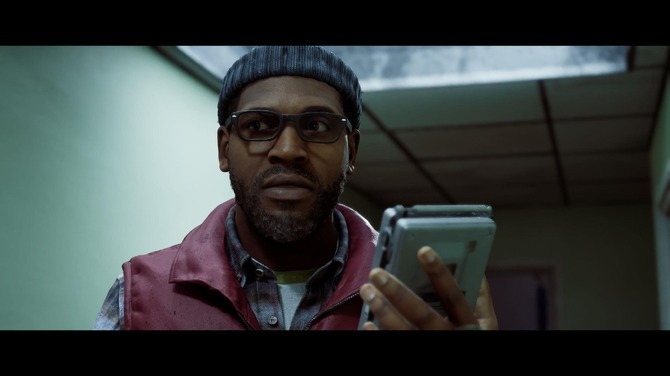
And the “CRTV”—a portable television you acquire early on—ensures that this analog sci-fi aesthetic isn’t confined to mere background art but is integrated into the gameplay itself.
This device is an evolution of the series’ traditional radio. Turn the dial to search for signals drifting across the island and tune in to an enemy’s frequency. When you do, the silhouette of the enemy behind the wall will appear, allowing you to determine not only where they are but also which direction they’re facing.
However, you can only detect one enemy at a time. In areas with multiple creatures, you’ll need to switch frequencies and track their movements one by one. This mechanic is somewhat similar to the “Field of View Jack” feature in *SIREN*. You piece together a safe path for yourself by sifting through fragments of information.
And the CRTV only reveals information about enemies. While you can estimate the approximate distance based on the silhouette’s size, it doesn’t show the surrounding terrain—such as fences, walls, or elevation changes. Although it’s a handy device that lets you see enemies through walls, it doesn’t seem to kindly reveal everything.

This sense of incompleteness—"you can see, but you don’t know everything"—is utilized quite skillfully. When you look through the CRTV, an enemy silhouette appears right next to you. You steel yourself and cautiously approach, only to find that the enemy is actually trapped on the other side of a fence, leaving you feeling a bit let down. And just like that, you end up passing right by them without incident.
That’s reassuring, isn’t it?
However, if you return to that spot thinking it’s safe, you might find that the barrier blocking the enemy has been removed. In a place that was supposed to be safe before, the same enemy now comes chasing after you. To avoid these ambushes, you need to not only spot enemies with the CRTV but also use the “peek” command to check your surroundings.The unique appeal of this game lies in finding a safe path by combining these two methods of observation.

Furthermore, the CRTV doesn’t just detect the presence of enemies. It can also pick up video and audio recordings left behind on St. Amelia, as well as mysterious signals, all of which serve as clues for exploration and puzzle-solving.At times, you may even receive communications sent to Simon from other characters. While it is a device for surviving encounters with enemies, it also serves as a “window into the past,” allowing you to glimpse what happened on this island.
In short, the CRTV fulfills three major roles: a detection device for locating enemies, a puzzle mechanism for solving mysteries, and a device for conveying the story. All of these are condensed into the single act of “looking” at a single, weathered screen.

And what’s interesting is that this act of “looking” isn’t one-way.Simon peeks at events on the island through the CRTV, while the player stares at Simon through the screen. Furthermore, if you expose yourself to observe enemies, you, in turn, become the one being watched. You are both the observer and the observed. This dynamic repeats itself throughout the game, constantly shifting in form.
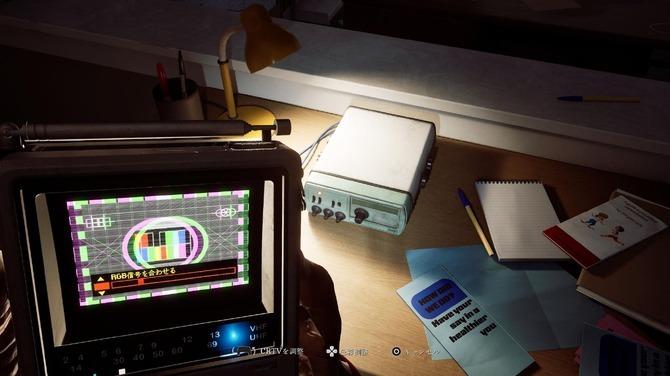
That’s precisely why it’s a shame that the role of the CRTV gradually narrows as the game progresses.In the early stages, it’s used in a variety of ways—not only for detecting enemies, but also for deciphering the story through video and audio, and even as a tool for solving puzzles. However, as the story progresses, it rarely appears as a puzzle mechanism, and its role in conveying the narrative gradually fades. As a result, by the end of the game, its use is primarily limited to scenes where it serves as a device for locating enemies.
Given that it was a device capable of linking stealth, exploration, storytelling, and puzzle-solving all through the single act of “seeing,” I really wish its multifaceted nature had been utilized all the way to the end.
┌─ [04] ───────────────────│ Puzzle-Solving Itself Becomes the Story └────────────────────────
While there were a few disappointing aspects regarding CRTV, my assessment changes significantly when I focus on the puzzle-solving itself. In fact, when it comes to the puzzles, I felt this title was among the very best in the series.
To explain why, I need to touch on the story briefly.
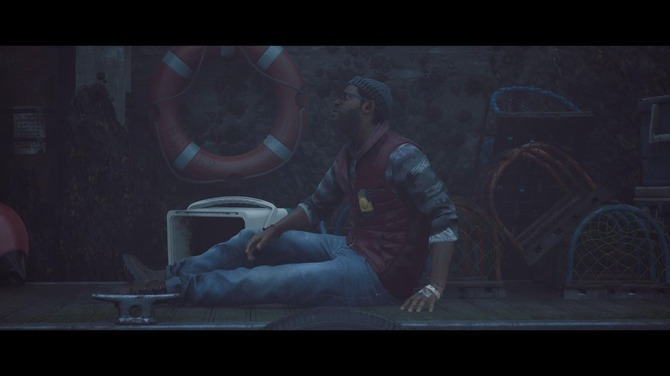
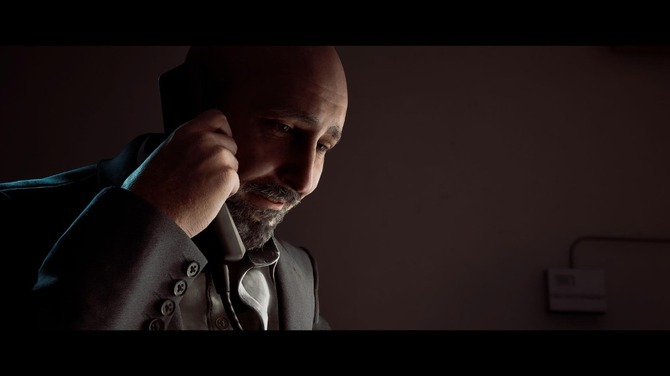
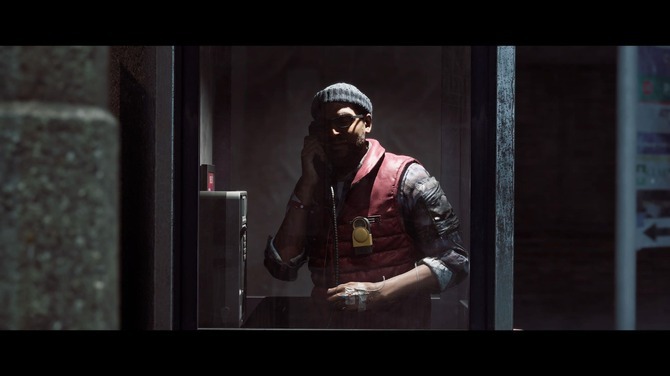
The game opens with Simon washing ashore on St. Amelia, as if guided by a figure known as “Richard.” While it evokes the narrative structure and atmosphere of *Silent Hill 2* in some ways, as he investigates a past even he himself doesn’t know, his relationship with the island gradually takes shape.
Unlike *Silent Hill f*, this isn’t the type of game where your impression of the story and characters is drastically reshaped with each playthrough. To be honest, if you’ve played a fair amount of the series, there probably aren’t that many moments where the scenario itself will truly surprise you.
Even so, the narrative experience in this game leaves a lasting impression. The main reasons for this are the background art and the puzzle-solving.

Previous *Silent Hill* games have also incorporated the story’s themes into their puzzles. Notable examples include the gallows in *Silent Hill 2*, reminiscent of “Sin and Judgment,” and the Shakespeare-themed puzzles in *Silent Hill 3*.However, in most cases, this connection was limited to symbolism or allegory. Solving the puzzles didn’t, in and of itself, allow players to directly experience the events that took place there.
Of course, there were also titles that took this a step further. For example, in *Silent Hill 4: The Room*, there were scenes where you physically manipulated the facility itself to understand how it was used and what had happened there.In *SILENT HILL f* as well, the puzzles and the story were designed to remain as closely intertwined as possible, so that solving the puzzles directly led to a deeper understanding of the characters.
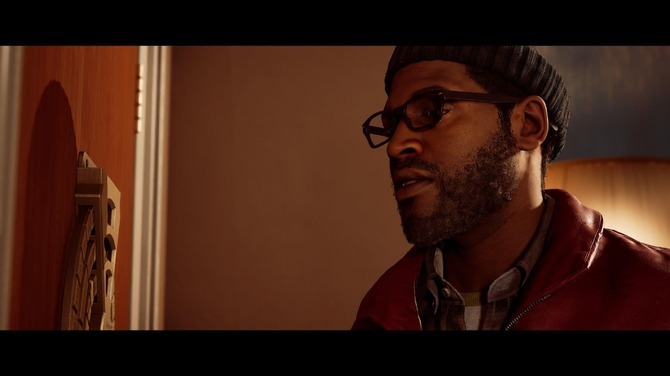

And in this title, that approach has been taken a step further throughout the entire game.
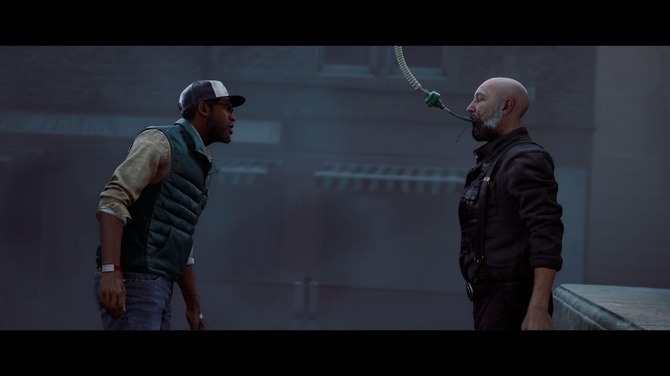
For example, midway through the game, there’s a scene where you temporarily take control of “Zoe,” a nurse working at a local family clinic. In her segment, you retrace the steps of a surgical procedure performed during a time when medical resources were in short supply. There are also puzzles where you recreate the circumstances of an accident through Simon’s perspective.
In this game, the story isn’t simply a reward waiting for you after you solve a puzzle. The act of piecing together what happened with your own hands is the narrative itself.Throughout the game, solving puzzles and unraveling the events that took place in St. Amelia are designed to be virtually one and the same. Rather than simply being told about the past through cutscenes or text, the story comes to life as a result of your own actions. That is where the unique pleasure of this game lies.
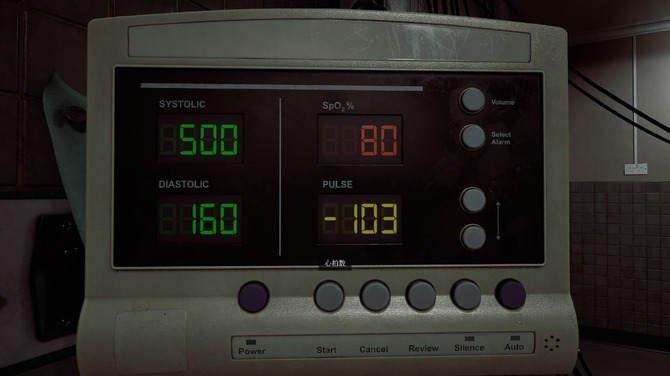

This game does not feature the “puzzle difficulty” settings familiar from previous entries in the series; the only option is to enable hints in the settings. Even so, the puzzles themselves are among the more challenging in the series.
However, I didn’t feel that this difficulty was separate from the story. Precisely because you can’t arrive at the answer immediately, you end up operating the machine repeatedly, rereading the information left behind, and piecing together what happened there in your own way. The difficulty is designed not just to help you understand the story, but to experience it with a sense of reality.
In *SILENT HILL: Townfall*, puzzles aren’t trials designed to slow the player down. They’re a means of verifying, with your own hands, the events that took place there.
And underpinning this experience are the machines and equipment left behind throughout St. Amelia: circuit breakers that control the power, vital signs monitors displaying patients’ heart rates and blood oxygen saturation levels, and a weathered projector.Each has its own unique interface and method of operation, presenting itself as a meticulously crafted puzzle. Flip a switch, turn a dial, read the displayed numbers—interacting with these machines in this way becomes a means of connecting with the activities that once took place in that very location.
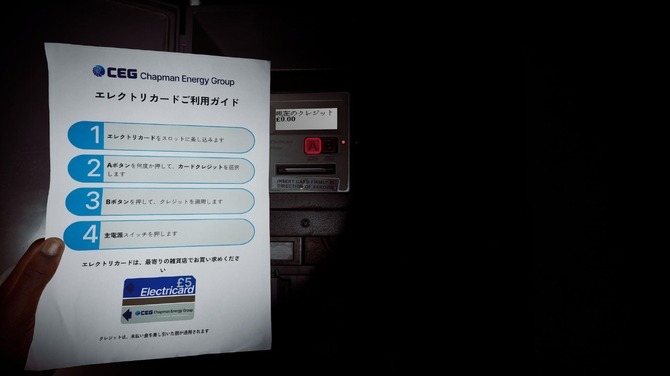
The puzzle-solving toward the end, in particular, was the scene where this design philosophy was most clearly evident. I’ll refrain from going into detail here to avoid spoilers. It’s a scene where the sights and events you’ve witnessed up to that point converge into a single meaning. Rather than struggling with a difficult cipher, what’s important is not looking away from what happened there, but facing it properly once again.
Peering at signals through the CRTV, watching enemies from behind cover, and glimpsing the past through puzzle-solving. Looking back on it this way, it seems we were engrossed in “seeing” something for quite a long time in this game.
┌─ [05] ───────────────────│ What St. Amelia Left Behind └────────────────────────
Well, it’s about time we left St. Amelia.
Looking back, *SILENT HILL: Townfall* was a *SILENT HILL* title that strongly infused the series’ tradition with Screen Burn Interactive’s own artistic vision.

And this game depicts more than just the nightmare that one person brought to Silent Hill. Rather, at its core lies the disconnect that arises between those who seek to save and those who are to be saved.Development to save the island. Medical care to save patients. Though all of these were surely born out of good intentions and necessity, they eventually end up inflicting wounds on someone else.
Is the future envisioned by those who “save” truly the same as the future desired by those who are “saved”? The more you trace the scars left behind in St. Amelia, the more weight that question takes on.
That is precisely why, by the time you leave the island, both the blue mist you first saw and the desolate townscape will likely appear somewhat different. This is because the choices and regrets of the people who once lived there will be superimposed onto each and every scene that previously seemed merely beautiful yet eerie.
Game*Spark Review: “SILENT HILL: Townfall” PC/PS5 September 24, 2026
A new “SILENT HILL” that carries on the legacy of ‘Alien: Isolation’ while transforming the puzzle-solving itself into a story
-
GOOD
- It’s a stunningly beautiful island, colored by blue mist and a crimson-tinged industrial landscape
- If you use CRTV and the “Peek” feature skillfully, you can create a safe and secure sightseeing route however you like
- The game features a wealth of puzzles that let you uncover the island’s past with your own hands
BAD
- Some of the creatures could use a little more of that unique, otherworldly eeriness
- You’ll mainly get to enjoy CRTV’s diverse features during the first half of your journey.
©Konami Digital Entertainment
©2026 Annapurna Games, LLC
©2026 Screen Burn Interactive Ltd. “Screen Burn” is a registered trademark of Screen Burn Interactive Ltd.



