


This might be a bit out of the blue, but what comes to mind when you hear the word “superpowers”?
Psychokinesis—moving objects without touching them—levitation that defies gravity, and mysterious beams of light fired from the hands. These are wholesome fantasies that people all over the world, throughout history, have dreamed of at least once during their “middle-school-age delusions” phase, and they’re the quintessential form of entertainment that’s incredibly cathartic.Is there any other “legal drug” for escapism that requires so little effort? That was the previous title, *CONTROL*.
However, the latest release from Remedy Entertainment—that madhouse from Scandinavia—*CONTROL Resonant* builds on the success of its predecessor while hurtling full speed in a completely different direction as an action RPG, delivering a brand-new fantasy.
Instead of a gun, you’re handed a melee weapon that transforms in all sorts of ways. You’re thrown into a New York City that’s a feverish nightmare itself, where three otherworldly factions are locked in a turf war. And the protagonist is a young man who, having participated in a massacre in the previous game, is now glared at by everyone around him as if he were the enemy.
Lured in by the sweet sound of a “psychic action RPG,” I plunged in only to find myself in a brutal Manhattan where even healing potions don’t exist—a grueling survival ordeal where I had to fight off supernatural horrors while slowly whittling away at my own life.
This article was written using a PC version code provided by Remedy Entertainment.
System Specs: PC (CPU: AMD Ryzen 7 9800X3D / GPU: AMD Radeon RX 9070 XT)
Resolution: 1440p (AMD FSR enabled; ray tracing sadly turned off partway through)
Time to Complete: Approximately 36 hours (including side content; the official estimate of “27–30 hours for the main story, 50 hours including side content” was spot on)
Spoilers: I’ve limited this review to elements up to the first half of the story’s midpoint and have strictly avoided any major spoilers.
The main villain from the previous game is the protagonist!? A three-way hellscape born from seven years of total isolation
If you played the previous game, you’ll surely remember her: Jesse Faden, the strongest heroine who stormed the Federal Bureau of Control (FBC)—a top-secret government agency—and crushed supernatural phenomena with her transforming Service Weapon pistol and exhilarating debris-throwing attacks, ultimately rising to become the Director, the agency’s supreme leader.
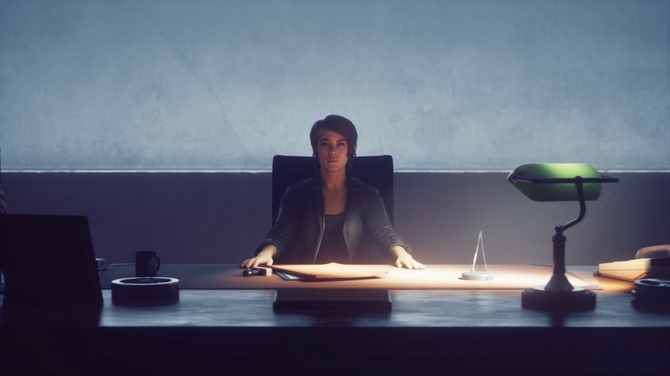
Don’t worry if you’re suddenly confronted with references to the previous game and have no idea what’s going on. The title menu features a short explanatory video that concisely summarizes the events of the first game, allowing even first-time players to fully grasp the background.
Jesse, who was appointed Director at the end of the previous game, made a shocking decision. To completely contain the “Hiss”—invaders from another realm rampaging through the building—she implemented a seven-year total lockdown, severing all external connections to the headquarters, the Oldest House.Seven long years of complete isolation from the outside world. The documents you’ll find throughout the game are packed with raw, candid complaints from the trapped staff.
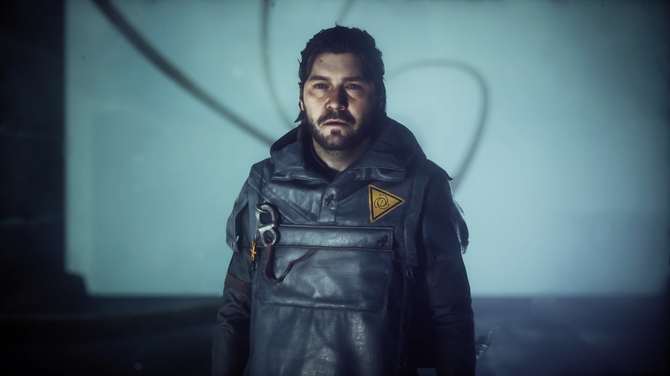
Then, seven years later. Sensing that yet another unknown threat was approaching from another dimension, Jesse roused his younger brother Dylan from his coma and then suddenly vanished. (Why did you disappear without giving the most important explanation, Director!?)
At the same time, the His—who had been trapped for seven years—finally escaped from the Oldest House. Like a massive dam collapsing, a massive swarm of His poured into the streets of Manhattan, New York. As if that weren’t enough to turn your stomach, even greater despair awaited them in Manhattan.

The “His”—invaders that spill into the city and take over people’s bodies and minds.

The “Mold,” a spore-based life form that contaminates all organic matter and wreaked havoc in the previous game.
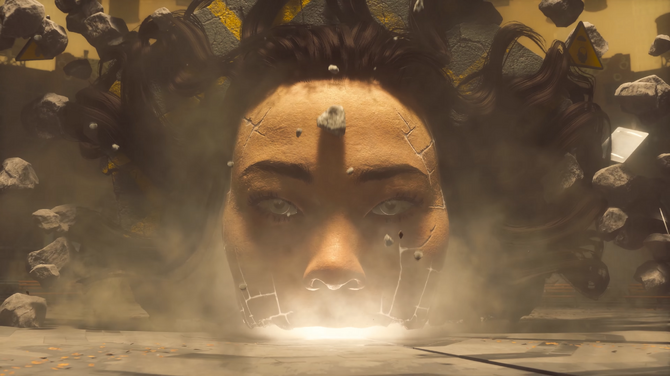
And “Pattern” (Resonators), an unidentified third force that suddenly invaded from another dimension.
Set in New York, a hellish three-way battle royale begins!
The protagonist is suddenly thrown into the thick of it
Manhattan, where the laws of physics have gone haywire, has been transformed into a scene of utter chaos as these three supernatural forces slaughter one another. Dylan Faden, the protagonist of this story, is jolted awake right in the midst of this catastrophe.

As a boy, he was abducted and held captive by the FBC, where he endured over a decade of biological experiments. In the previous installment, driven by a desire for revenge against the FBC, he collaborated with His to carry out a mass slaughter of the staff—making him the true mastermind behind the chaos.Though this man offers his cooperation—declaring, “I’ve come to find my sister. I’ll defeat His and save the city”—the stares he receives from the surviving staff members are nothing short of ruthless.
“How dare you show your face here?”
And rightfully so—he is, after all, the very man responsible for slaughtering all his colleagues. If his sister weren’t the former director, he would have been shot on the spot, but Dylan manages to convince them by wearing a lethal device that will kill him instantly if he turns against the FBC.
Of course, he continues to face intense hostility afterward. However, it is precisely these extreme interpersonal dynamics that add spice to the story.

Among the staff, there are some who learn of Dylan’s harsh upbringing and show him understanding. And above all, as the story progresses and they witness Dylan—battered and bruised—charging single-handedly into a swarm of His and fighting while covered in mud, the tone of the conversations among the nameless NPCs who aren’t directly involved in the plot visibly softens.
NPCs who initially spoke behind his back in a blatantly dismissive manner begin to reveal genuine trust in the nuances of their dialogue by the time the story reaches its midpoint.
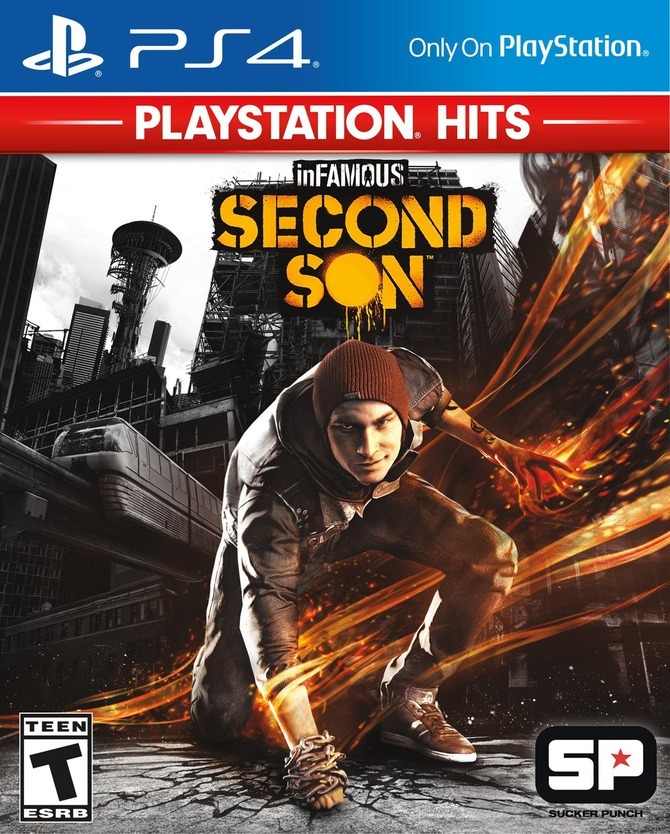
Do you remember that moment in the classic *inFAMOUS Second Son*, when Delsin—who was initially branded a terrorist and pelted with stones—stuck to the path of the hero, eventually earning the passionate support of the people, and in the end, the citizens rose up to give him a boost? I’m a total sucker for situations like that—where a gifted outsider, persecuted by those around them, earns trust through gritty, down-to-earth actions.
Ditch the guns and go in for the brawl! At first glance, it’s a “musou” game, but the early-game melee mechanics make it a “die-and-retry” experience.
The previous game was a polished superpower TPS where you fired a gun that transformed at will and threw debris. But in this installment, Dylan wields the “Aberrant,” a transformable melee weapon.
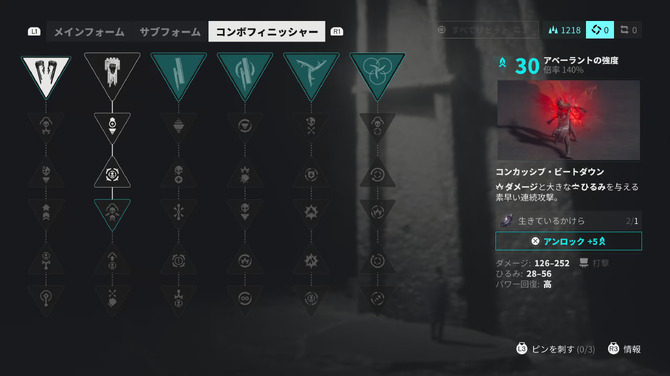
The Aberrant offers options in each of three categories: main attacks, secondary attacks, and combo finishers.Even just for main attacks, there’s a variety of options—from a well-balanced longsword to a dual-wielding style with rapid attacks, and a sickle that sweeps a wide area. When combined with special combat abilities, skill trees, and accessories, each player can create their own unique build.
The feel of combat using these builds is, to put it mildly, superb.
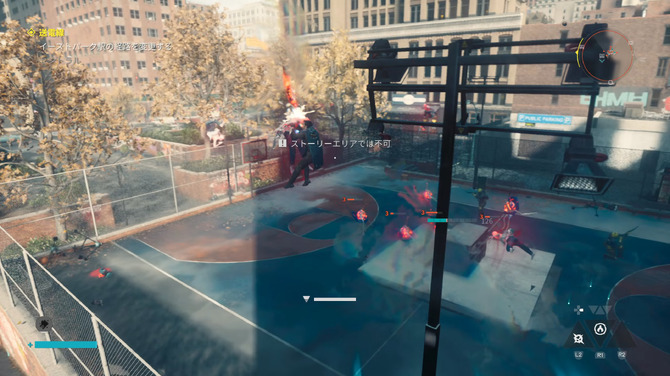
Simply by jumping on the ground and randomly tapping the attack button, Dylan automatically tracks and dashes upward at high speed toward enemies floating far above.You can then gracefully soar through the air while beating the enemy to a pulp. When I first started the game, I wondered how to attack enemies floating so high up, but Dylan reaches them with ease. His vertical range of movement is incredibly wide.
In addition to an HP gauge, enemies have a stun meter. If you not only deplete their HP but also build up their stun meter to the maximum, you can obliterate any enemy—except bosses—with a single finisher. The sense of rhythm that comes from stunning multiple enemies at once and dispatching them one after another with a single button press is exhilarating.
When facing a barrage of enemy attacks, you have two options: defend with a skill or dodge. There is no parry mechanic. If you just-dodge an enemy’s attack, a stylish slow-motion cutscene plays, and from there, you can unleash a powerful move to launch a relentless offensive.
Dodging enemy attacks and relentlessly landing my own, I thought, “Whoa! No need for god-tier aim! Right now, I’m a god of the extraordinary!”
…That’s how I was completely carried away in the early stages. Yeah, it’s totally a trap set by the developers.
What all of humanity has been waiting for! The frenzy of Ashtrey Maze is back to set your brain ablaze
Let me take a moment here to address my fellow players who’ve played the previous game.
Remember that scene toward the end of the previous game, where you charged through the twisted, labyrinthine Ashtray Maze with Old Gods of Asgard’s “Take Control” blaring from your Walkman?
That was one of the greatest experiences in gaming history, wasn’t it?
Even now, just hearing the intro sends a flood of endorphins surging through my brain. There’s no way you could easily create a catharsis that surpasses that.
…Or so I used to think.
Believe it or not, *CONTROL Resonant* generously throws that legendary combination—the iconic song paired with insane stage mechanics—into multiple scenarios without holding back.
This time around, Remedy has prepared not only intense rock tracks but also mellow tunes and up-tempo numbers—they completely understand what sends players into a frenzy. If you’re someone whose brain was fried by Ashtrey Maze, you’re guaranteed to be grinning from ear to ear while clutching your controller.
The thrill of exploring a feverish nightmare and the hopelessly cheesy floating pose
Visually, I’m completely speechless.

Manhattan, where gravity goes haywire in every direction, skyscrapers twist into geometric patterns, and people and birds are frozen in midair. This world is, in the best possible way, exactly like the nightmares you have when you have a 40-degree fever from the flu.
Combined with the power of the Ryzen 7 9800X3D and Radeon RX 9070 XT, the texture of dust particles dancing in the air and the particles of light leaking from rifts into another dimension are breathtakingly beautiful.The scale has expanded from the cramped office buildings of the previous game to a three-dimensionally open city, taking the thrill of exploring by leaping from building to building to a whole new level.

However, I have to turn a blind eye to the fact that Dylan’s floating animation is hopelessly lame.With his arms and legs spread out awkwardly, his joints all wobbly like an octopus, and his body floating in a “whoosh”—it’s the kind of performance that would win the “Lame Game of the Year” award unanimously if such a category existed. How can he pull off such cool combos, yet suddenly look so goofy when he’s floating? Jesse nailed it, though.
There are quite a few complaints, too
So far, I’ve been raving about what a fantastic gaming experience this is, but after spending over 30 hours thoroughly playing through the game, I’d like to bluntly point out some flaws—the kind that made me want to drag Remedy behind the gym for a good hour and say, “Hey, Remedy, come with me.”
The Harsh Reality of No Healing Items and Transparent Giant Bosses
This game has absolutely no portable healing items, like health potions. The only way to restore HP is to pick up Life Essence that scatters when you defeat enemies.If you want to survive, you have no choice but to throw yourself into the screen-filling barrage of bullets and keep defeating enemies. While you can simply run away from regular enemies, boss battles are a whole different story.
Since no regular enemies spawn during boss battles, your only means of recovery is to chip away at the boss’s HP until it reaches a certain threshold and spits out Essence. On top of that, Dylan’s armor is paper-thin in the early game, while the bosses have surprisingly high durability. The price of a single mistake is steep.

Even worse are some of the gigantic boss battles. Because the boss is so disproportionately large compared to the screen, the camera applies a transparency effect to the boss’s massive body, making its attack animations invisible—a mistake that’s absolutely unacceptable in an action game.
As you level up, the drop rate for Essences increases and auto-generated skills kick in, turning it into a “musou”-style game, but the early stages leading up to that point were truly brutal.
If you ever feel like you’re about to give up, take a look at the Assist Mode in the options. You can make adjustments that are practically official cheats—like boosting your damage output by up to 500% or draining enemies’ HP to almost nothing. You’ll still be able to earn achievements and trophies without any issues.
The Confusing Concept of Build Power = Level
The barrier that stands in the way of inexperienced players is “Build Power,” which corresponds to character level. This can only be increased by upgrading weapons and progressing through the skill tree.
Although the recommended level is displayed above enemies’ heads, if you try to rush through the main story at breakneck speed, the enemies will keep getting stronger and stronger, leading to a situation where Dylan’s attacks won’t even scratch them. The reason I found the early-game bosses to be unusually tough was purely due to a lack of Build Power.However, since this Build Power value is hidden deep within the Loadout menu, the UI is unfriendly and very easy for beginners to overlook.
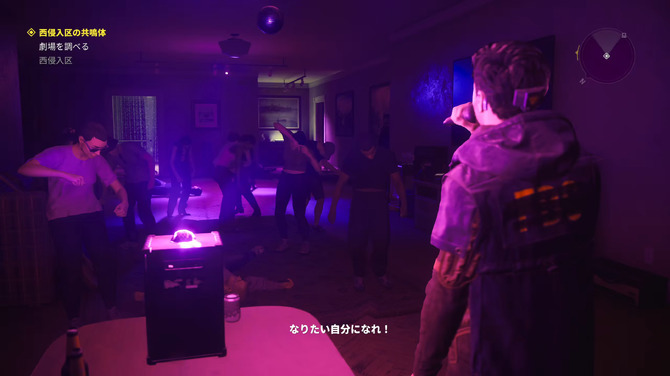
Exploring Manhattan and completing side quests are practically mandatory to obtain upgrade materials, but the game’s navigation isn’t the kind of hand-holding system that guides you all the way to your destination or even walks you through puzzles.It’s the classic style: you have to read documents scattered around the scene and figure out the location on your own. Some of the puzzles were so baffling that I had to scratch my head and think, “Is there really no hint here…?” and just skip them. Someone, please tell me the answer.
Lock-on that gets you sucked into nearby enemies, causing group battles to fall apart
Group battles in this game basically consist of a large boss accompanied by an endless stream of minions. The minions keep spawning until you defeat the boss, and only the boss drops enhancement materials. Naturally, you want to lock onto the boss and focus your attacks on it.
However, the game’s internal logic seems to prioritize attacking the enemy closest to Dylan. So even if you’re locked onto a large enemy right in front of you, the moment a minion trots up from behind, Dylan suddenly spins around and starts attacking the minion behind him.
What exactly is “lock-on” supposed to mean?
My turn! Draw! Sacrificing graphics for better playability!
I had a bad feeling about this even when I played the demo back in June, but battles in areas where His’s signature red haze overlaps with stage effects dyed entirely in red are, to put it mildly, visual torture.

The outlines of enemy attack animations completely blend into the red background, and you get slowly whittled down without even knowing what’s coming at you. Since I was getting beaten up so unfairly, I sacrificed the game’s visual beauty myself by applying the following settings.
Color Adjustment (Accessibility): Reduced the saturation of red by 10%. Just this alone makes the enemies’ outlines stand out clearly.
Turn off ray tracing: Even with my RX 9070 XT, the reflections and the haze from the Hiss were so beautiful that the amount of visual information was overwhelming, so I turned off ray tracing to clean up the screen. The haze from the Hiss, in particular, made hit detection far too difficult to discern, so this was a major improvement; the frame rate also jumped, and visibility improved dramatically.I never expected the graphics—which are the game’s main selling point—to actually work against me like this.
The Inconsistencies in Localization and the Subtitle Overload
The dedication to offering Japanese voice acting from day one is admirable in itself. However, perhaps because they were too faithful to Dylan’s backstory—a character whose emotions have been numbed by over a decade of brutal experimentation—the Japanese voice acting sounded completely wooden, making it quite difficult to empathize with Dylan.
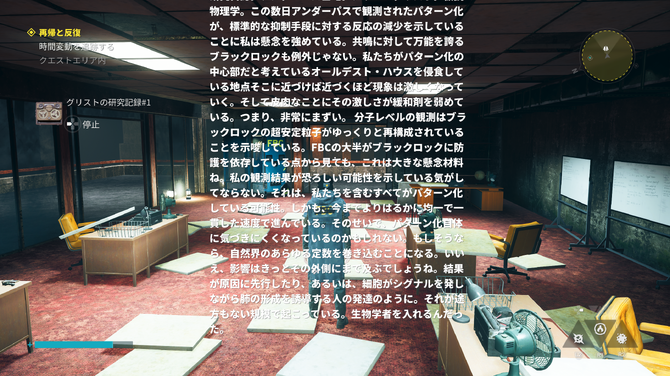
Furthermore, whether due to circumstances at the voice recording studio or not, the phrasing of the lines you hear doesn’t match the subtitles on screen—and to make matters worse, text that appears to be acting directions is even left in the subtitles.To top it all off, a strange phenomenon occurs during some events where lengthy text—on par with the opening crawl of the “Star Wars” movies—completely fills the screen. I confirmed this in multiple events.
There was also an audio glitch where dialogue from one quest would play during another, but I’d like to believe this will be fixed in a future update.
That said, the translation quality of the vast amount of documentary material scattered throughout the game is flawless. If you’re a fan of SCP-style reading material, this alone is worth the price of admission.
It’s rough around the edges, but this nightmarish, disorienting sensation is a one-of-a-kind experience
*CONTROL Resonant* isn’t a flawless, textbook-perfect action game. The lock-on mechanics are frustrating, the screen is so red it makes your eyes water, and the camera work and subtitles are noticeably rough around the edges. However, most of these issues will likely be resolved in future updates.
More importantly, there’s that moment when you’re flying between skyscrapers amid chaotic gravity, getting sucked into the chaos of Hiss, Mold, and Patterns as you unleash your attacks—that frenzy of music and action, inherited from the Ashtray Maze lineage, is something no other action RPG can ever replicate.
By the time you’ve groped your way through the ruins of Manhattan, gathered materials to upgrade Dylan, and become powerful enough to crush the formidable foes that once tormented you, you’ll be completely hooked on this game.If you’re sick and tired of games with overly forgiving, user-friendly designs, and you want to get into a fistfight with unreasonable supernatural phenomena in a feverish nightmare, don’t hesitate—dive headfirst into Manhattan. An intense, one-of-a-kind experience awaits that you won’t find anywhere else.
Also, the pre-order bonus accessory is so durable that you’ll be able to use it well into the mid-game, so be sure to pre-order.
Game*Spark Review: “CONTROL Resonant”
PC / PS5 / Xbox Series X|S
September 24
, 2026
A blade of extraordinary power that cuts through feverish nightmares—a superb melee action RPG woven with a one-of-a-kind sense of weightlessness
GOOD
- A fusion of the transformable weapon “Averant” and psychic powers delivers a sublime sense of weightlessness and stylish melee combos
- A spectacular combat sequence that blends divine music with mad mechanics, letting you relive the frenzy of “Ashtray Maze”
- Overwhelming, fever-dream-like graphics that beautifully depict a Manhattan where gravity and common sense have collapsed
- An Assist Mode with extreme freedom of play that lets anyone race to the ending without penalties
- A vast collection of high-quality, translated FBC classified documents that reading enthusiasts can lose themselves in for hours
BAD
- Lock-on behavior that tends to pull you toward the nearest minor enemies rather than the intended large enemies in group battles
- Extremely poor visibility in areas where the hissing red haze overlaps with the red background effects (requires settings adjustment)
- Rough UI and presentation, such as poor visibility caused by camera transparency during giant boss battles and subtitles that cover the entire screen



